
Modal keeps coming up in DTC sourcing conversations. But most brands walk in with the wrong mental model — and that costs them later.
Modal is a specific cellulosic fiber made from beechwood pulp. It has higher wet strength, finer fiber diameter, and different dyeing behavior compared to standard viscose. For intimate wear and base layers, these differences affect fit, color consistency, and long-term softness — and they show up in production before they show up on your customer.
We’ve been running Modal production lines at our factory in Zhongshan for years. The questions we get from DTC brand clients before their first Modal order are always the same. So this article is our attempt to answer them properly — from the production side, not the spec sheet side.
The Science of Beechwood Cellulose: Does Modal Actually Behave Differently From Viscose?
Brands come to us benchmarking Modal pricing against commodity viscose. That’s the first problem.
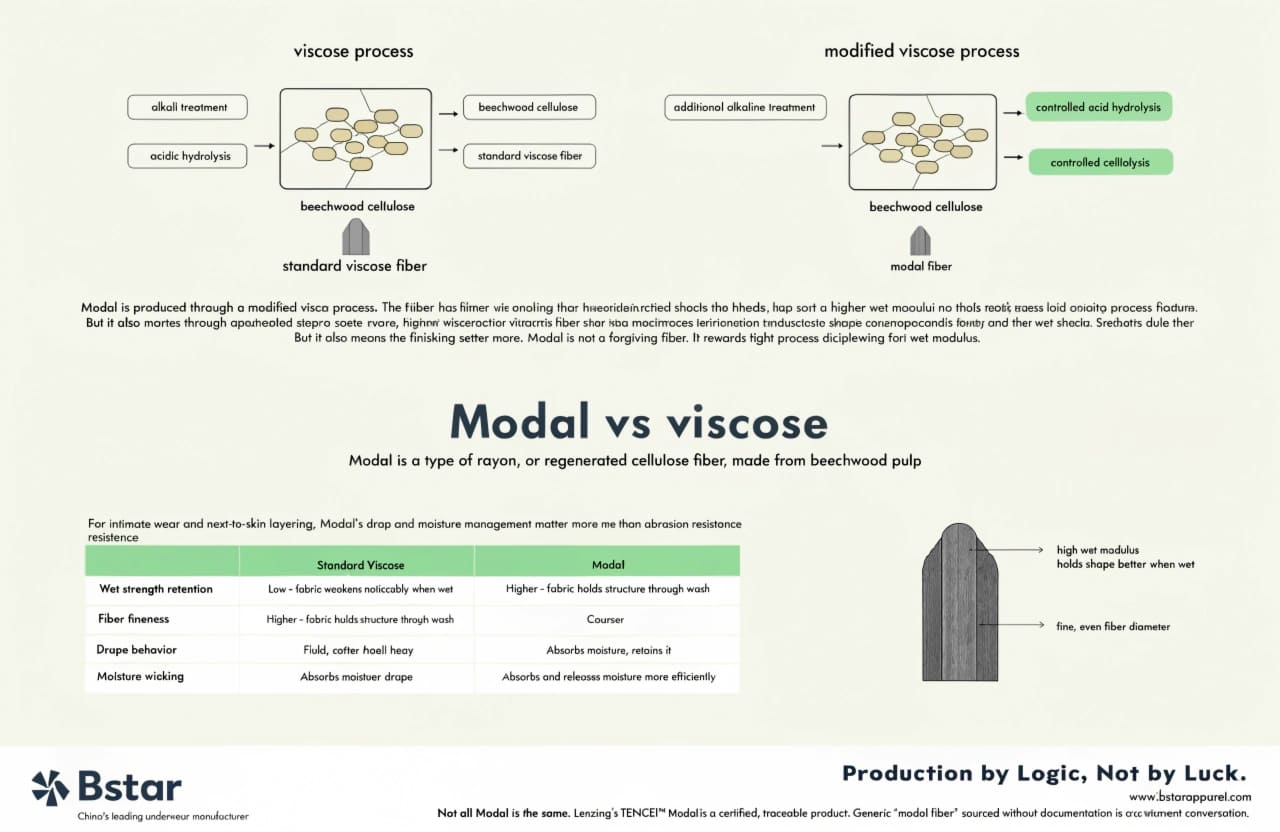
Modal fiber is produced through a modified viscose process, but the fiber itself is finer, has higher wet modulus, and holds its shape better when wet. For intimate wear and next-to-skin layering — where drape and moisture management matter more than abrasion resistance — these are real differences, not marketing claims.
When we source Modal yarn versus standard viscose yarn, the price gap reflects actual input differences — raw material grade, spinning process, fiber fineness. A brand that pushes back on Modal pricing by pointing to viscose quotes is comparing the wrong inputs. It’s like questioning why combed cotton costs more than carded cotton. The answer is in the production step you’re paying for.
What "High Wet Modulus" Actually Means in Production
| Property | Standard Viscose | Modal |
|---|---|---|
| Wet strength retention | Low — fabric weakens noticeably when wet | Higher — fabric holds structure through wash |
| Fiber fineness | Coarser | Finer, softer hand-feel |
| Drape behavior | Good, but can feel heavy | Fluid, lightweight drape |
| Moisture wicking | Absorbs moisture, retains it | Absorbs and releases moisture more efficiently |
In production terms, higher wet modulus means the fabric is more stable during wet processing — dyeing, rinsing, finishing. This is one reason why Modal can come out of the dye bath looking cleaner and more consistent than standard viscose, when the process is controlled correctly. But it also means the finishing steps matter more. Modal is not a forgiving fiber. It rewards tight process discipline and punishes shortcuts.
We also want to flag one thing directly: not all Modal is the same. Lenzing’s TENCEL™ Modal is a certified, traceable product. Generic "modal fiber" sourced without documentation is a different conversation. The sustainability claim that often gets attached to Modal — because it comes from managed beechwood forests — is supply-chain dependent. We source yarns with FSC and OEKO-TEX® certifications at our end, but brands should ask this question at every supplier conversation, not assume it.
Processing & Blending Strategies: Should You Run Modal Alone or Blend It?
Pure Modal briefs sound great on paper. In practice, they come with trade-offs that brands often don’t anticipate until the first fitting.
Modal blended with elastane (typically 5–10%) significantly improves recovery and dimensional stability for intimate wear. Adding cotton to the blend can reduce cost and improve durability under repeated wash. The right blend depends on the product’s end use — not on what sounds best in a fabric description.
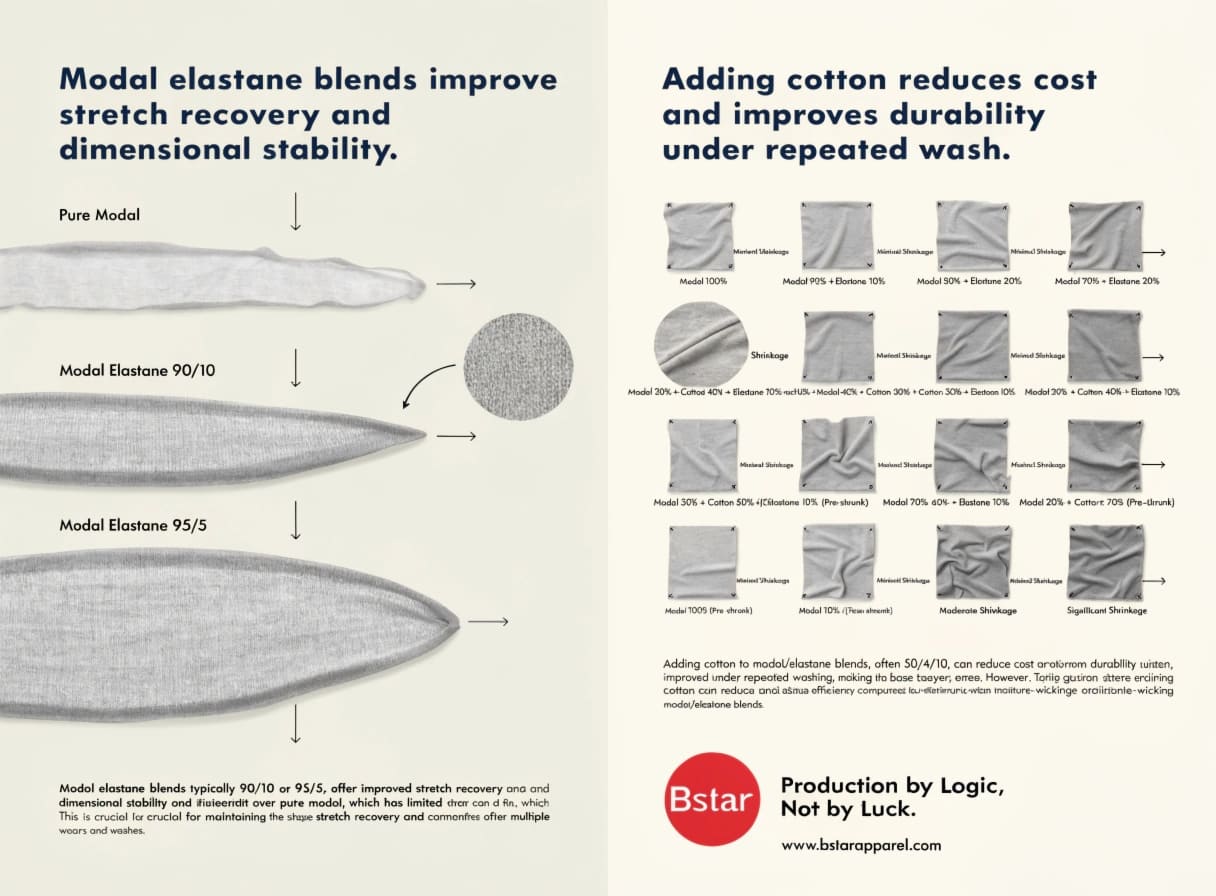
When clients bring us a Modal brief or base layer concept, the first thing we clarify is the blend ratio and the intended wash behavior. Here’s why: Modal on its own has limited stretch recovery. For a brief or fitted top, that means the garment can lose its shape after several washes if the knit structure and elastane content aren’t calibrated properly.
How We Think About Modal Blends at the Production Stage
Modal + Elastane (e.g., 90/10 or 95/5)
This is our most common setup for intimate wear. The elastane gives recovery without changing the hand-feel too much. Gauge selection matters here — finer gauges (32 or higher) preserve the softness and reduce pilling risk. We always have this conversation with clients before we finalize the fabric spec.
Modal + Cotton + Elastane (e.g., 50/40/10)
A more cost-efficient option for loungewear or casual base layers. Cotton adds body and durability. The trade-off is slight reduction in drape and moisture-wicking efficiency. For some products, that’s completely acceptable.
Pure Modal (100%)
We don’t recommend this for form-fitting styles without serious pre-shrinkage treatment in the production workflow. The bigger point here: shrinkage in Modal is predictable if you build pre-shrinkage treatment into the process before cutting. Many of our clients have discovered shrinkage issues post-delivery, not because Modal is unpredictable, but because the manufacturer skipped the pre-treatment step and put it on the care label instead. That’s a production decision, not a laundry problem.
Color Brilliance and Dye Affinity: Why Modal Dyeing Needs Tighter Process Control
Modal’s dye uptake is one of its real advantages. But that same sensitivity to dye can become a liability if the dyeing process isn’t controlled carefully.
Modal has high affinity for reactive dyes, which means colors come out vibrant and rich. But temperature control and auxiliary agent selection during the dye bath directly affect color fastness. Loose process control at this stage leads to uneven color, bleeding, and batch-to-batch inconsistency.
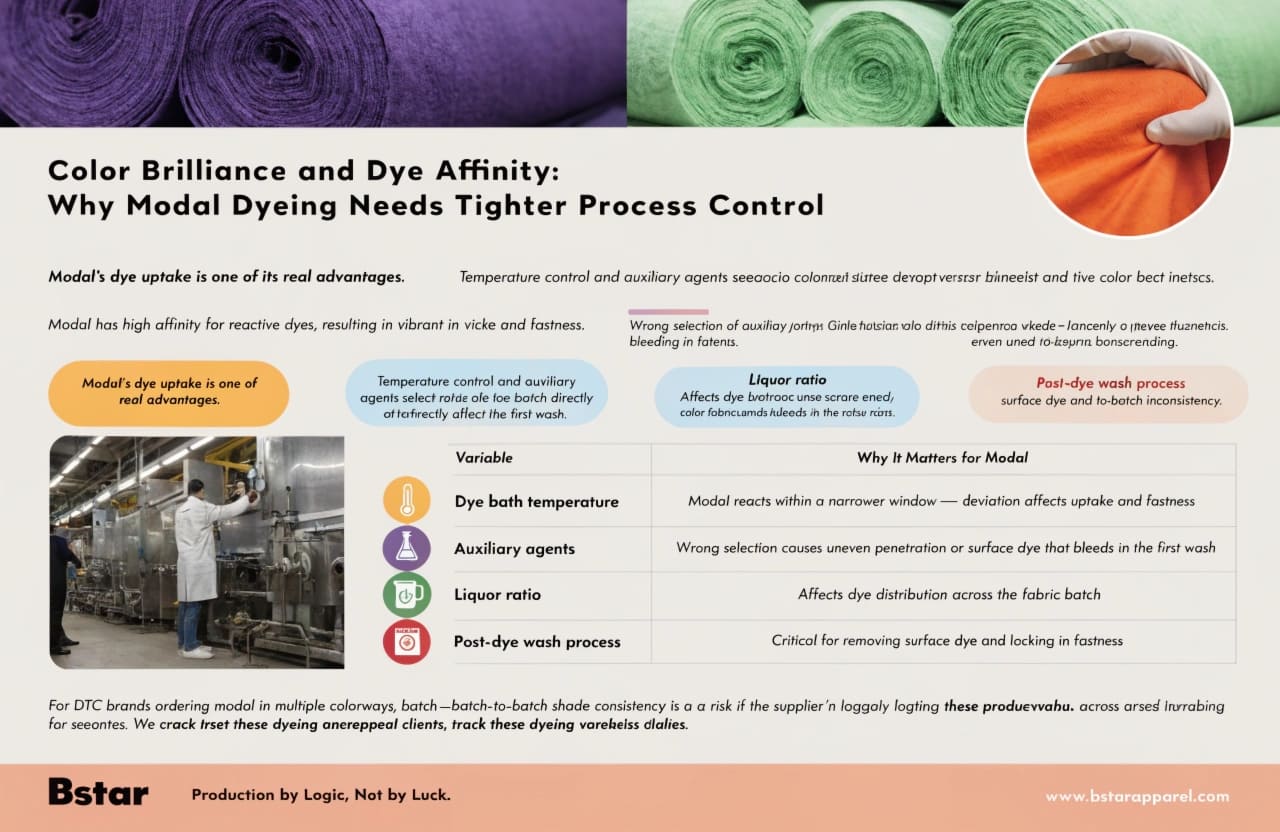
In our production, Modal dyeing is a quality checkpoint we treat with more attention than cotton. Cotton is more forgiving across a temperature range. Modal’s reaction window is tighter. If the temperature drifts or the auxiliary agents aren’t matched correctly to the fiber, you see it in the final color — either in fastness failures or in shade variation between rolls.
What We Control at the Dyeing Stage
| Variable | Why It Matters for Modal |
|---|---|
| Dye bath temperature | Modal reacts within a narrower window — deviation affects uptake and fastness |
| Auxiliary agents | Wrong selection causes uneven penetration or surface dye that bleeds in first wash |
| Liquor ratio | Affects dye distribution across the fabric batch |
| Post-dye wash process | Critical for removing surface dye and locking in fastness |
For DTC brands ordering Modal in multiple colorways — which is common for intimate wear — batch-to-batch shade consistency is a real risk if the supplier isn’t logging and repeating these variables precisely. We track this across production runs for repeat clients. It’s not complicated, but it requires discipline. Brands should ask suppliers directly: how do you manage shade consistency across dye batches? If the answer is vague, that’s a signal.
Preserving the Silky Hand-Feel: What Brands Should Know Before Writing the Care Label
Modal’s softness is its most marketable property. It’s also the most fragile one — and this is largely a product design question, not a consumer behavior question.
Modal’s fine fiber structure makes it prone to pilling and snagging if the knit gauge, loop structure, and finishing aren’t matched to the fabric’s end use. Brands specifying Modal without discussing these variables with their manufacturer risk a product that degrades faster than expected — and attributes it to washing, when the real cause is in the original spec.
We’ve had clients come back after their first season with pilling complaints on Modal briefs. In most cases, the root cause wasn’t washing — it was gauge selection. A coarser gauge on a fine Modal yarn creates more surface exposure, which means more friction points in wear and wash. The care label says "gentle cycle." But the fix was in the machine setup, not the laundry instruction.
Production Decisions That Affect Long-Term Hand-Feel
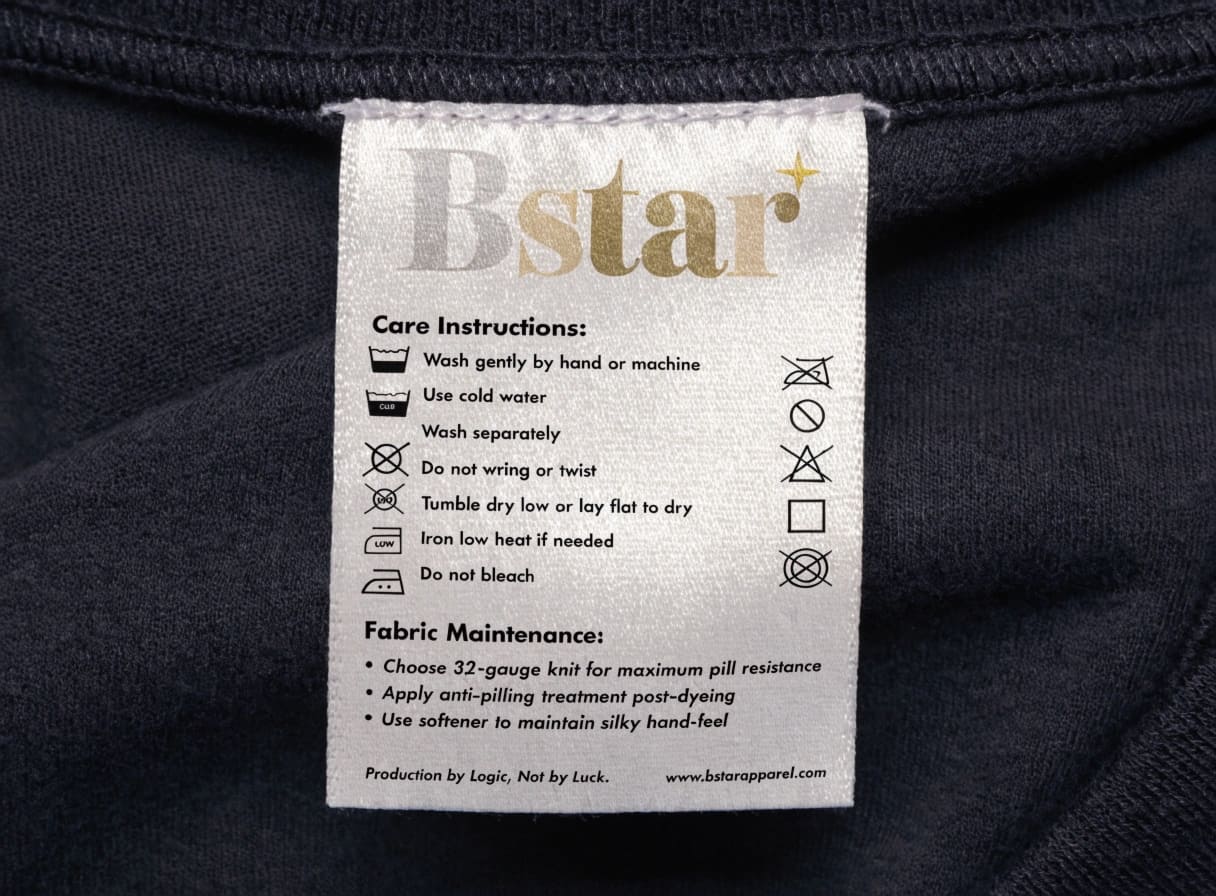
Knit gauge: For Modal intimate wear, 32-gauge or higher produces a tighter, more stable structure that resists pilling. Lower gauges feel thicker but introduce more snag risk with a fine fiber like Modal.
Finishing treatment: Anti-pilling treatments and softener application after dyeing affect how the fabric surface behaves over time. These are not optional steps for Modal — they’re part of delivering on the product promise.
Care label design: Gentle cold wash, no tumble-dry on high heat, no bleach. These are the standard recommendations we build into client spec sheets. But they work because the production steps before them were done correctly. If pre-shrinkage treatment was skipped, the care label won’t save the fit.
For brands: the care label conversation should happen during product development, not at packaging. If your manufacturer is writing the care label without explaining what production steps back it up, that’s a gap worth closing before you place the order.
Conclusion
Modal rewards the brands that understand it — and creates expensive surprises for the ones that don’t. Know the fiber, ask the right production questions, and close the gaps before you cut.
Discussion & questions 0 comments