
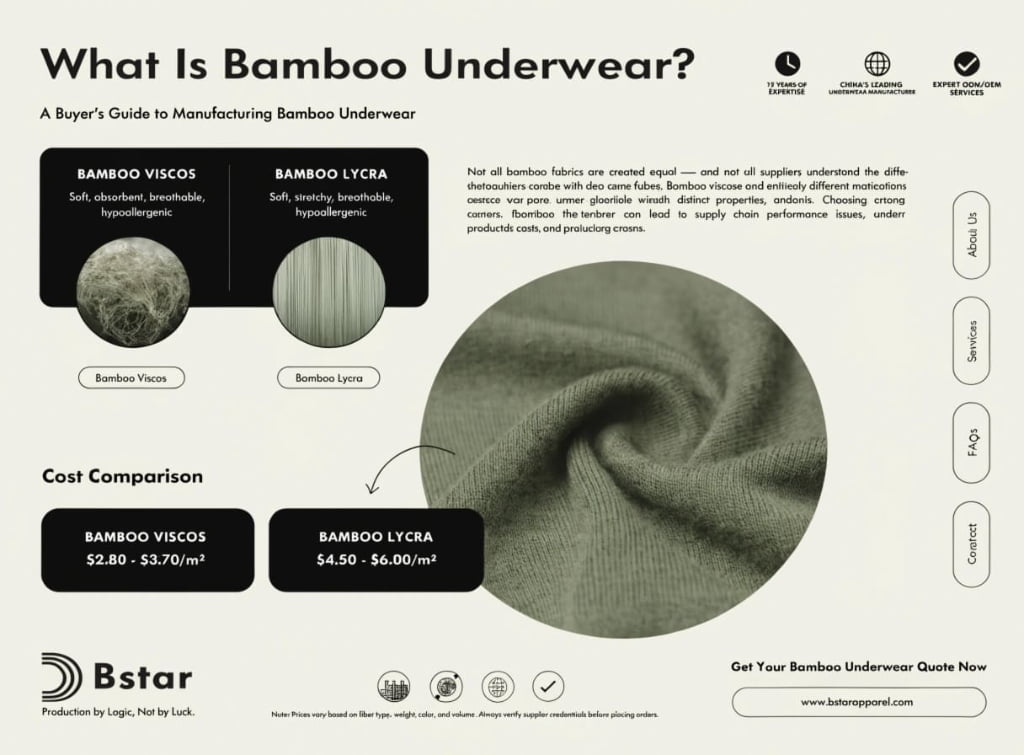
Most buyers come to us with the same question: "Is bamboo underwear expensive?" That’s the wrong starting question. The right one is: "Which bamboo fiber, and for what?"
Bamboo underwear can be soft, breathable, and hypoallergenic — but only if you’re working with the right fiber type and the right specs. The sourcing risk isn’t cost. It’s buying the wrong material because you didn’t know there were two completely different things called "bamboo fabric."
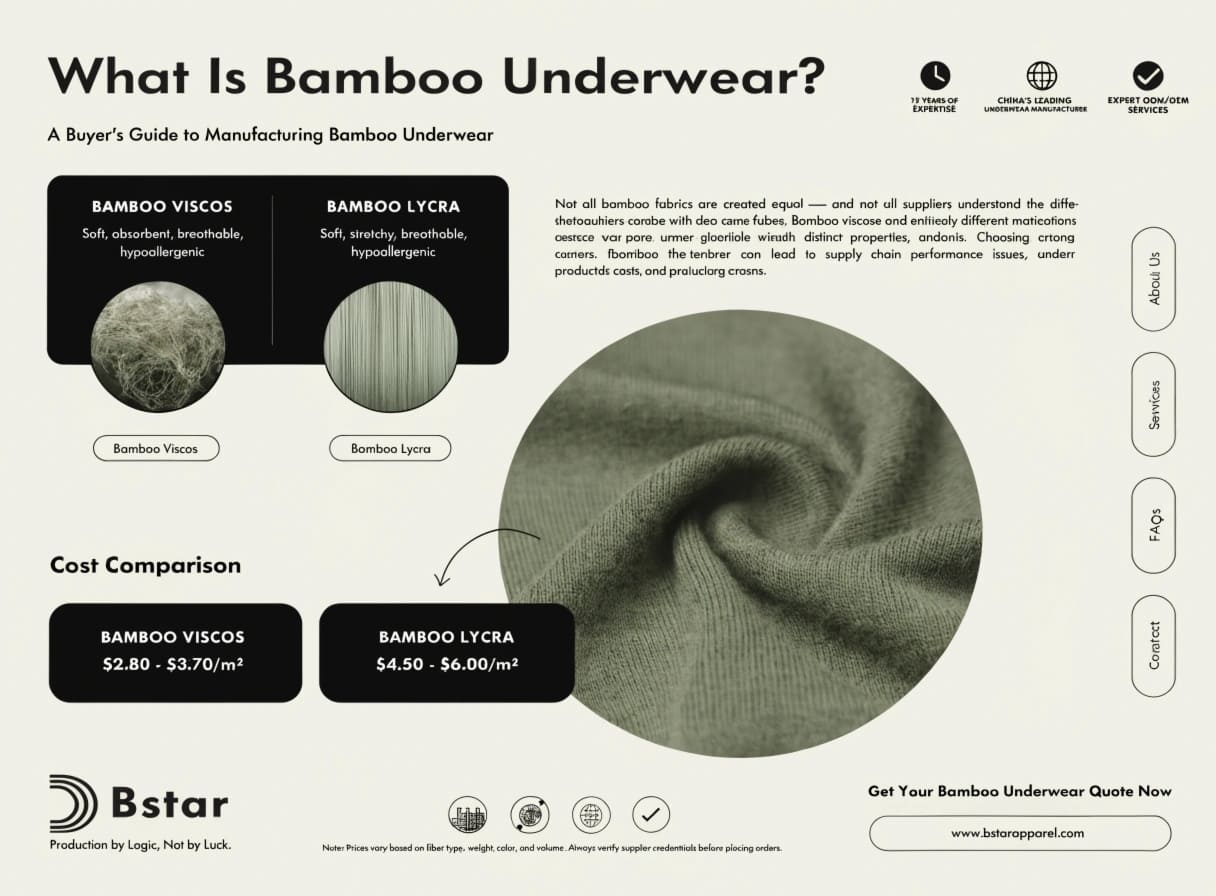
We’ve been making knit garments, including bamboo underwear, for 19 years. I’ve sat through hundreds of buyer conversations, and the same misunderstandings keep coming up. This article is my attempt to cut through the noise and give you a clear picture of what bamboo underwear actually involves — from fiber to finished product.
The Power of Bamboo: Do the Benefits Actually Hold Up?
Every brand pitch says bamboo is "antibacterial, breathable, and hypoallergenic." But does that apply to every bamboo fabric?
Bamboo viscose — the dominant fiber in bamboo underwear — is soft, moisture-wicking, and gentle on skin. These properties are real, but they come from the fiber structure, not just the plant origin. They are also affected by how the fabric is processed and finished.
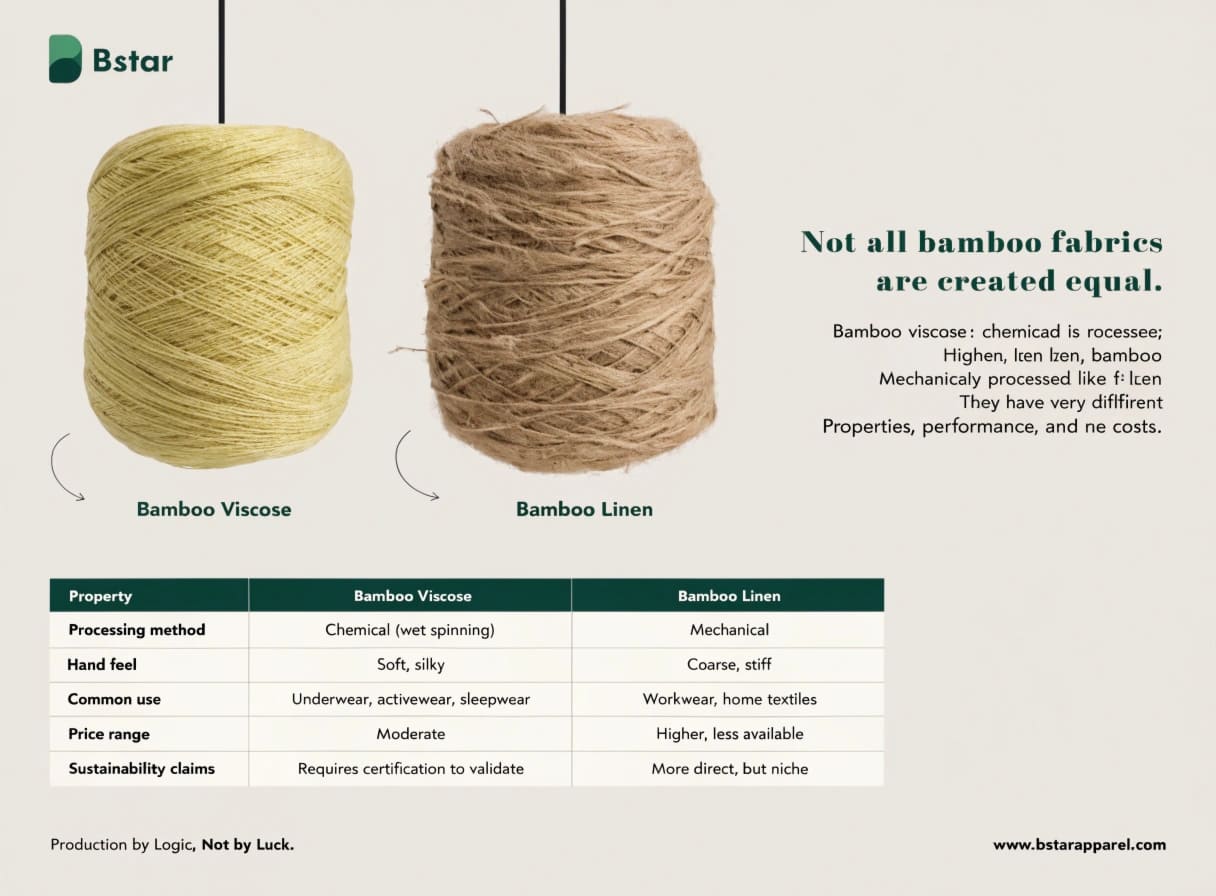
Here’s the distinction that most buyers miss. There are two main types of bamboo fiber used in garments:
Bamboo viscose (bamboo rayon): This is chemically processed. The bamboo pulp is dissolved and re-extruded into fiber1. The result is a soft, smooth, absorbent yarn — ideal for underwear. This is what 95%+ of bamboo underwear on the market uses2.
Bamboo linen: This is mechanically processed, similar to how flax is processed into linen. The result is much coarser and stiffer. It’s rare in underwear. You’ll mostly see it in home textiles or workwear.
Why does this matter? Because if a buyer just asks a supplier for "bamboo fabric," they may get quotes for both — or quotes that aren’t even comparing the same thing. The price gap between bamboo viscose and bamboo linen isn’t a sign of a dishonest supplier. It’s a sign that both parties are talking about different materials.
| Property | Bamboo Viscose | Bamboo Linen |
|---|---|---|
| Processing method | Chemical (wet spinning) | Mechanical |
| Hand feel | Soft, silky | Coarse, stiff |
| Common use | Underwear, activewear, sleepwear | Workwear, home textiles |
| Price range | Moderate | Higher, less available |
| Sustainability claims | Requires certification to validate | More direct, but niche |
The antibacterial and hypoallergenic benefits most people associate with bamboo underwear3 apply specifically to bamboo viscose — and they are most consistent when the fabric is OEKO-TEX® certified4, meaning the processing chemicals and final product have been tested. We source certified yarns for our bamboo underwear production precisely because the fiber origin alone doesn’t guarantee the end product is clean or safe.
Cost Analysis: Why "Bamboo Is Expensive" Is Only Sometimes True?
Buyers coming from cotton underwear sourcing often assume bamboo will cost significantly more. That’s not always the case.
Bamboo underwear cost is driven by blend ratio, GSM, fabric construction, and certification requirements. A standard 70% bamboo viscose / 30% spandex underwear, at moderate GSM and without premium certifications, can land at prices comparable to mid-range cotton underwear.
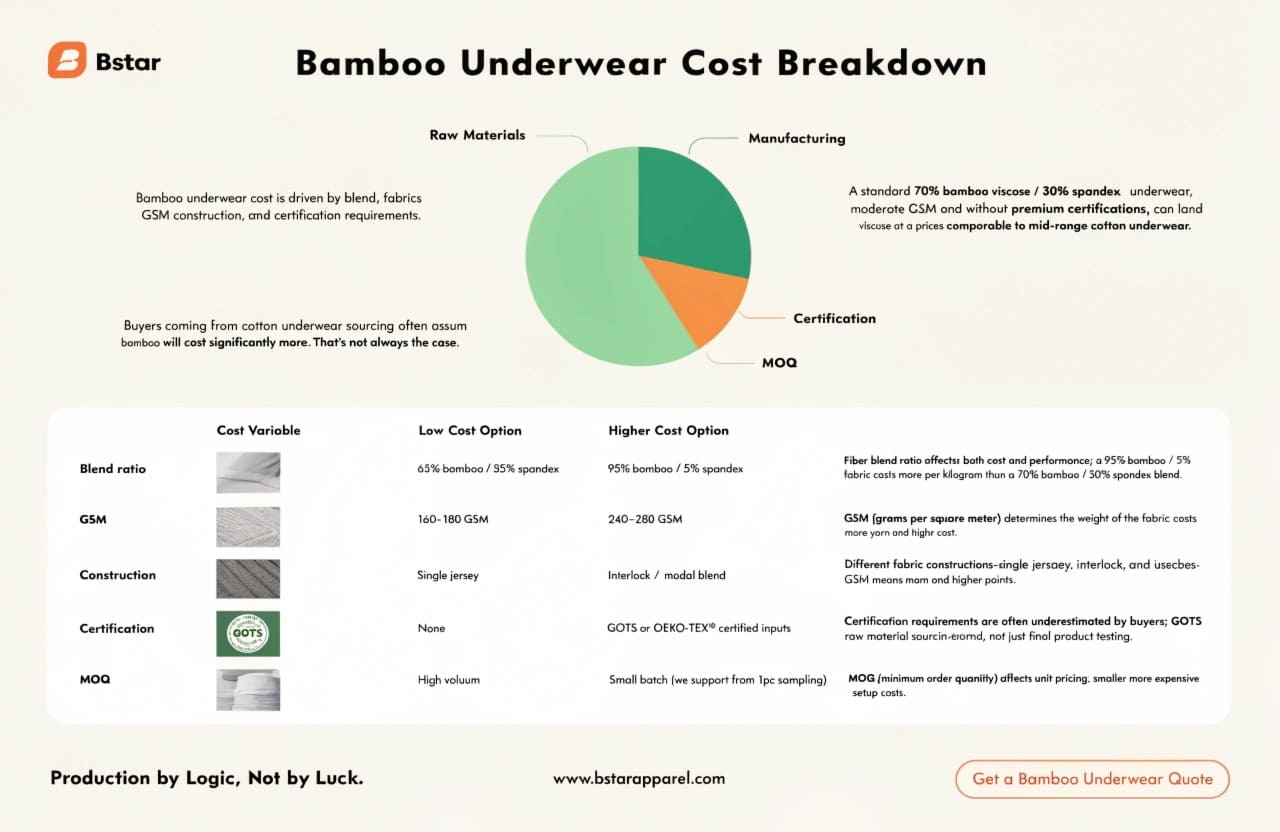
Let me break down the real cost variables we work with when quoting bamboo underwear:
Fiber blend ratio
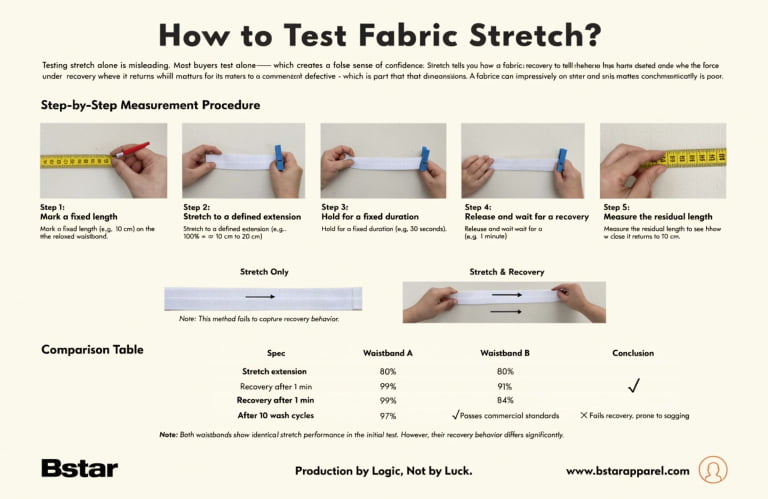
A 95% bamboo / 5% spandex fabric feels incredible but costs more per kilogram than a 70% bamboo / 30% spandex blend. The spandex ratio also affects stretch recovery, so this isn’t just a cost decision — it’s a performance decision.
GSM (grams per square meter)
A 180 GSM bamboo fabric and a 260 GSM bamboo fabric serve very different products. Heavier GSM means more yarn, more cost. Buyers who don’t specify GSM get quotes that are impossible to compare.
Fabric construction
Single jersey, interlock, and rib constructions all use bamboo viscose but produce very different feels and price points. Interlock is denser and more stable. Rib has stretch and recovery suited for waistbands. Each has a different yarn consumption rate.
Certification requirements
This is the one most buyers underestimate. If your brand claims GOTS-certified bamboo underwear, that affects raw material sourcing — not just final product testing5. We have to source from certified yarn suppliers, which does add cost. OEKO-TEX® is less restrictive but still requires certified inputs. If you’re making sustainability claims, build the certification cost into your spec — not as an afterthought.
| Cost Variable | Low Cost Option | Higher Cost Option |
|---|---|---|
| Blend ratio | 65% bamboo / 35% spandex | 95% bamboo / 5% spandex |
| GSM | 160–180 GSM | 240–280 GSM |
| Construction | Single jersey | Interlock / modal blend |
| Certification | None | GOTS or OEKO-TEX® certified inputs |
| MOQ | High volume | Small batch (we support from 1pc sampling) |
The bottom line: bamboo underwear is not a fixed price category. It’s a spec-driven category. When buyers tell me a competitor quoted them 40% cheaper, my first question is always: "Were the specs the same?" Almost always, they weren’t.
Sourcing Strategies: How Do You Avoid Getting the Wrong Product at the Wrong Price?
The most common sourcing mistake I see is starting with price negotiation before locking down specifications.
The right sourcing sequence for bamboo underwear is: clarify fiber type → define blend and GSM → confirm certification needs → then request quotes. Skipping the first steps makes supplier quotes incomparable and leads buyers to make decisions based on false price signals.
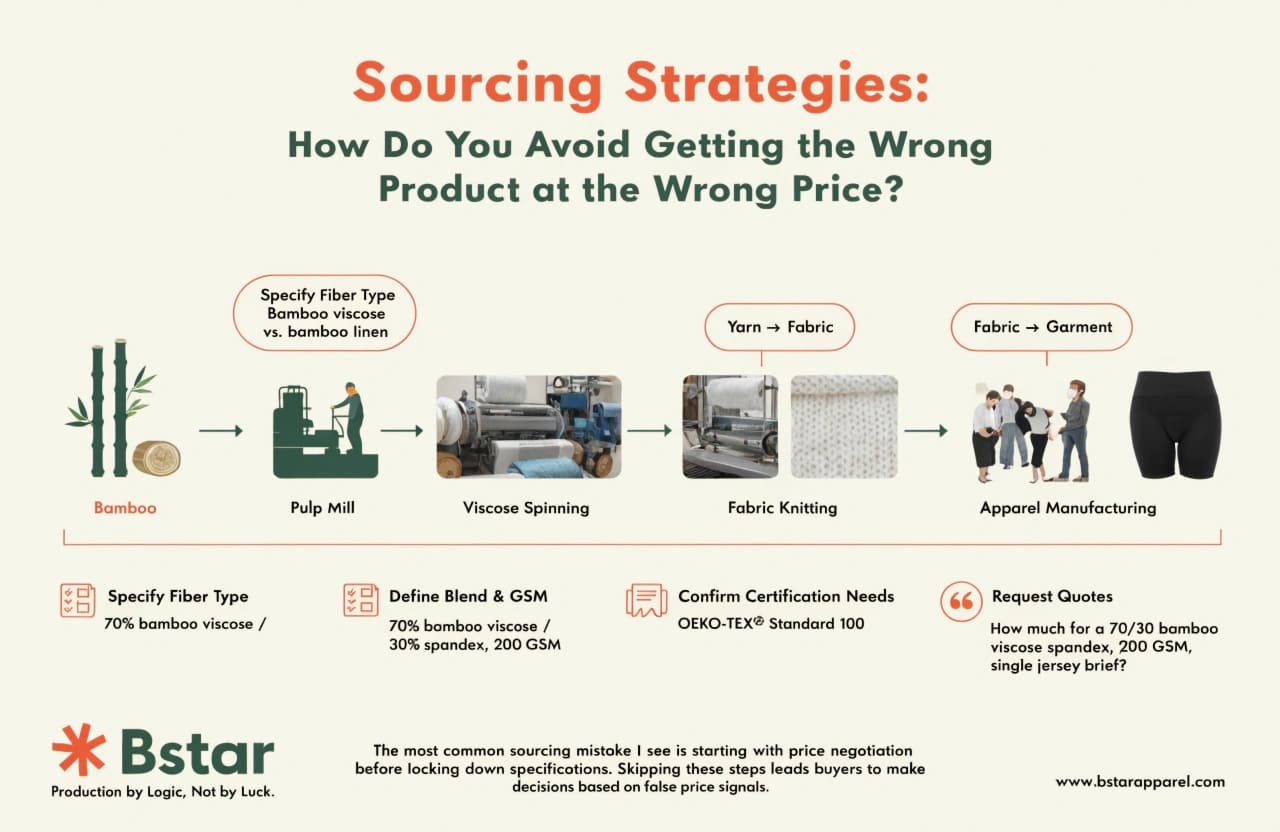
Here’s how I’d approach it if I were a buyer:
Step 1: Confirm you want bamboo viscose
Unless you have a specific reason to explore bamboo linen (unlikely for underwear), specify bamboo viscose explicitly in your inquiry. This alone eliminates most quoting confusion.
Step 2: Define your blend and GSM before asking for price
Don’t ask "how much for bamboo underwear?" Ask: "How much for a 70/30 bamboo viscose spandex, 200 GSM, single jersey brief?" That question gets you a quote you can actually use.
Step 3: Decide on certifications before sourcing
If your brand story involves sustainability, decide which certification you need — OEKO-TEX® Standard 100 (product safety) or GOTS (organic process chain). We hold both, and we source raw materials accordingly. But this decision has to come before production, not after.
Step 4: Sample first, scale second
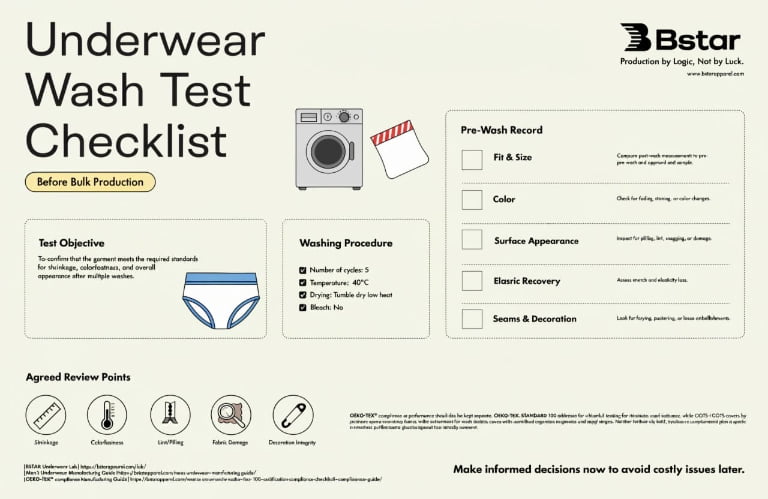
We support sampling from one piece. I always recommend DTC brands and e-commerce sellers start with a sample run before committing to a large order. The fabric hand feel of bamboo viscose varies between mills6. You need to touch it, wear-test it, and wash-test it before you finalize specs.
Step 5: Ask your supplier what certifications the yarn carries — not just the factory
A factory can have BSCI social responsibility certification7 (we do), but if the bamboo yarn isn’t OEKO-TEX® or GOTS certified, the product claim doesn’t hold. Ask for yarn-level documentation. Any credible supplier should have it.
Market Trends: Is the Demand for Bamboo Underwear Actually Growing?
The short answer is yes — but not for the reason most brand presentations claim.
Global demand for bamboo underwear is rising8 because consumers want softer, skin-friendlier basics, and bamboo viscose delivers that. The sustainability angle supports purchasing decisions but rarely drives them9. Brands that lead with feel and comfort retain customers; brands that lead only with eco-claims struggle with repeat purchase.
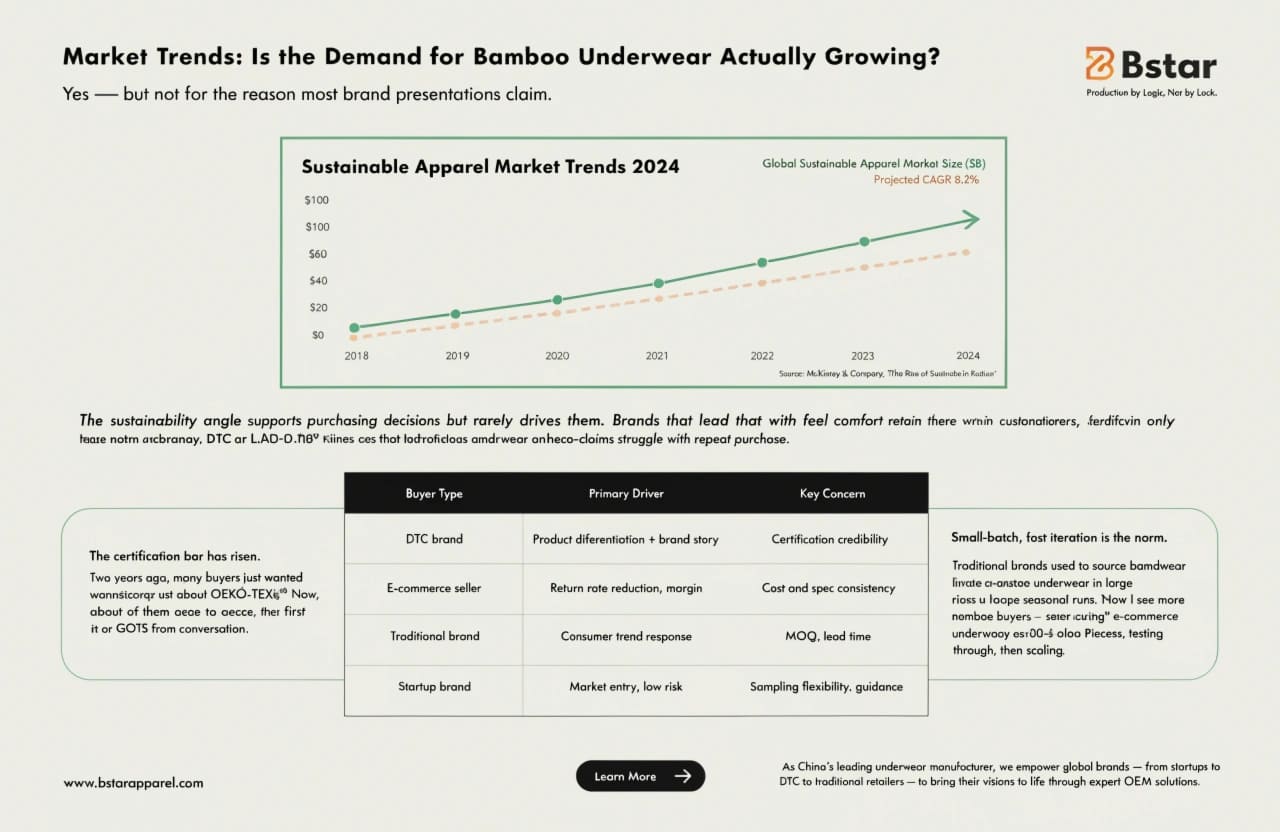
Here’s what I see from the buyer side of this market:
DTC brands are using bamboo as a product differentiation tool
Buyers from DTC brands typically ask about bamboo because they’re looking for a story — something that separates them from the basic cotton underwear market. Bamboo viscose gives them a real sensory product advantage (softer, less irritating) and an environmental narrative that, when backed by certifications, is credible.
E-commerce sellers care most about return rates
For pure e-commerce sellers, bamboo underwear’s hypoallergenic and skin-gentle properties reduce fit complaints and return rates from customers with sensitive skin10. That’s a concrete business metric, not just a marketing point.
The certification bar is rising
Two years ago, many buyers just wanted "bamboo fabric." Now, more of them ask about OEKO-TEX® or GOTS from the first conversation. This shift is driven by retail buyer requirements and increasingly by consumer awareness. Brands that don’t have certification documentation are losing B2B accounts.
Small-batch, fast iteration is becoming the norm
Traditional brands used to source bamboo underwear in large seasonal runs. Now I see more buyers — especially DTC and e-commerce — starting with 100–300 pieces per colorway, testing sell-through, then scaling. Our minimum order flexibility (starting from 1 piece for sampling) is specifically built for this workflow.
| Buyer Type | Primary Driver | Key Concern |
|---|---|---|
| DTC brand | Product differentiation + brand story | Certification credibility |
| E-commerce seller | Return rate reduction, margin | Cost and spec consistency |
| Traditional brand | Consumer trend response | MOQ, lead time |
| Startup brand | Market entry, low risk | Sampling flexibility, guidance |
The market is growing. But the brands winning in bamboo underwear are the ones who understand what they’re actually selling — a specific fiber, with real performance properties, backed by real documentation — not just a word on a label.
Conclusion
Bamboo underwear is a real product opportunity — but only if you start with the right fiber, the right specs, and the right certification decisions before you talk price.
-
"[PDF] How to Avoid Bamboozling Your Customers", https://www.ftc.gov/system/files/documents/plain-language/alt172-how-avoid-bamboozling-your-customers.pdf. The U.S. Federal Trade Commission has documented that bamboo-derived textiles sold as ‘bamboo’ are typically manufactured rayon produced by chemically processing bamboo plant cellulose through dissolution and fiber regeneration, a process identical to conventional viscose rayon production. Evidence role: definition; source type: government. Supports: That bamboo viscose is produced via a chemical dissolution and regeneration process, classifying it as a manufactured regenerated cellulose fiber rather than a natural fiber. Scope note: FTC guidance addresses labeling and consumer protection rather than providing a detailed technical description of the spinning chemistry. ↩
-
"Bamboo textile – Wikipedia", https://en.wikipedia.org/wiki/Bamboo_textile. Industry analyses of bamboo textile production consistently identify viscose/rayon as the predominant commercially available bamboo fiber form, with mechanically processed bamboo linen representing a marginal share of the market. Evidence role: statistic; source type: institution. Supports: The dominance of chemically processed bamboo viscose over mechanically processed bamboo linen in the apparel sector. Scope note: Precise market-share percentages for bamboo fiber subtypes are not widely published in standardized trade databases; available figures may reflect regional or segment-specific data rather than a global total. ↩
-
"Investigating the Antibacterial Characteristics of Japanese Bamboo", https://pmc.ncbi.nlm.nih.gov/articles/PMC9137583/. The U.S. Federal Trade Commission has cautioned that the chemical processing used to produce bamboo rayon/viscose destroys the natural antimicrobial properties present in the bamboo plant, and that antibacterial claims for finished bamboo textiles require substantiated test data rather than reliance on plant origin. Evidence role: expert_consensus; source type: government. Supports: The contested nature of antibacterial and hypoallergenic claims for bamboo viscose, and the regulatory position that such properties are not inherently retained after chemical processing. Scope note: Some peer-reviewed studies report residual or finishing-applied antimicrobial activity in bamboo viscose fabrics; the FTC position addresses unsubstantiated marketing claims rather than all possible formulations. ↩
-
"OEKO-TEX® STANDARD 100", https://www.oeko-tex.com/en/our-standards/oeko-tex-standard-100/. According to OEKO-TEX Association documentation, the STANDARD 100 by OEKO-TEX label certifies that every component of a textile article—including threads, buttons, and prints—has been tested for harmful substances and that the article is harmless in terms of human ecology. Evidence role: definition; source type: institution. Supports: That OEKO-TEX Standard 100 certification tests textile products and their components for harmful substances across the production chain. Scope note: OEKO-TEX Standard 100 is a product safety certification and does not certify organic farming or environmental sustainability of the production process, which is addressed by separate schemes such as GOTS. ↩
-
"Certification – GOTS – Global Organic Textile Standard", https://global-standard.org/certification-and-labelling/certification. The Global Organic Textile Standard (GOTS) specifies that certification covers the processing, manufacturing, packaging, labeling, trading, and distribution of all textiles made from at least 70% certified organic natural fibers, requiring chain-of-custody documentation at each stage of production. Evidence role: definition; source type: institution. Supports: That GOTS certification requires compliance throughout the entire textile supply chain from raw material through to labeling, including fiber sourcing and processing stages. Scope note: GOTS applicability to bamboo viscose is limited because viscose is a chemically regenerated fiber; GOTS certification for bamboo products typically requires the bamboo to be organically grown and the processing to meet specific chemical criteria, which not all bamboo viscose supply chains can satisfy. ↩
-
"Bamboo vs viscose vs rayon? : r/SustainableFashion – Reddit", https://www.reddit.com/r/SustainableFashion/comments/r61qnq/bamboo_vs_viscose_vs_rayon/. Textile engineering literature documents that viscose fiber properties—including fineness (dtex), tenacity, and surface smoothness—are sensitive to process variables such as coagulation bath composition, draw ratio, and finishing treatments, resulting in measurable differences in fabric hand feel across production facilities. Evidence role: mechanism; source type: paper. Supports: That bamboo viscose fabric properties, including hand feel, vary as a function of manufacturing process parameters that differ across production facilities. Scope note: Published studies typically compare process parameters in controlled laboratory settings; systematic inter-mill comparisons of commercial bamboo viscose are less common in peer-reviewed literature. ↩
-
"Standards & Governing Bodies – Working Conditions in Supply Chains", https://d3.harvard.edu/working-conditions-in-supply-chains/organizations/standards-governing-bodies/. The amfori Business Social Compliance Initiative (BSCI) is a supply chain management program used by European and international retailers to assess and improve social standards in supplier factories, covering areas including fair remuneration, occupational health and safety, and prohibition of child and forced labor. Evidence role: definition; source type: institution. Supports: That BSCI (now amfori BSCI) is a widely used social compliance auditing program covering labor rights, health and safety, and ethical business practices in supply chain factories. Scope note: BSCI is an auditing and improvement program rather than a product certification; it addresses factory-level social practices and does not certify the safety or environmental attributes of the finished textile product. ↩
-
"Bamboo Textile Market Report | In-Depth Market Analysis 2035", https://www.wiseguyreports.com/reports/bamboo-textile-market. Market research reports on the bamboo textile sector, including analyses by industry research firms, document compound annual growth rates in bamboo fiber apparel demand, driven by consumer preference for soft-hand and skin-friendly fabrics in the intimate apparel and activewear categories. Evidence role: statistic; source type: institution. Supports: That the bamboo textile and apparel market has been experiencing measurable growth in recent years. Scope note: Projections vary significantly across research providers and may conflate all bamboo textile applications rather than isolating the underwear sub-segment specifically. ↩
-
"How perceived sustainability influences consumers’ clothing … – PMC", https://pmc.ncbi.nlm.nih.gov/articles/PMC11576948/. Consumer behavior research in sustainable apparel markets indicates that while environmental attributes positively influence purchase intent, tactile and functional properties—including softness, fit, and comfort—consistently rank as primary purchase drivers, with sustainability serving as a secondary or tie-breaking factor for most consumer segments. Evidence role: general_support; source type: paper. Supports: That functional product attributes such as comfort and feel are stronger purchase drivers for apparel than environmental sustainability claims alone. Scope note: Findings vary by consumer demographic, product category, and geographic market; some studies show stronger sustainability-driven purchasing among younger and higher-income segments. ↩
-
"The Future of Functional Clothing for an Improved Skin and Textile …", https://pmc.ncbi.nlm.nih.gov/articles/PMC8226598/. Dermatological and textile comfort research indicates that fiber surface smoothness and low friction coefficient are associated with reduced mechanical skin irritation, and that regenerated cellulose fibers including viscose are generally considered low-irritant materials; however, direct clinical evidence specifically for bamboo viscose underwear in sensitive-skin populations remains limited. Evidence role: general_support; source type: paper. Supports: That smooth, low-friction regenerated cellulose fibers such as bamboo viscose are associated with reduced skin irritation compared to coarser fibers in individuals with sensitive skin. Scope note: Most available evidence addresses fiber friction and mechanical irritation rather than allergenic response specifically; the claim that bamboo viscose reduces e-commerce return rates is a business outcome not addressed in academic literature. ↩
Discussion & questions 0 comments