
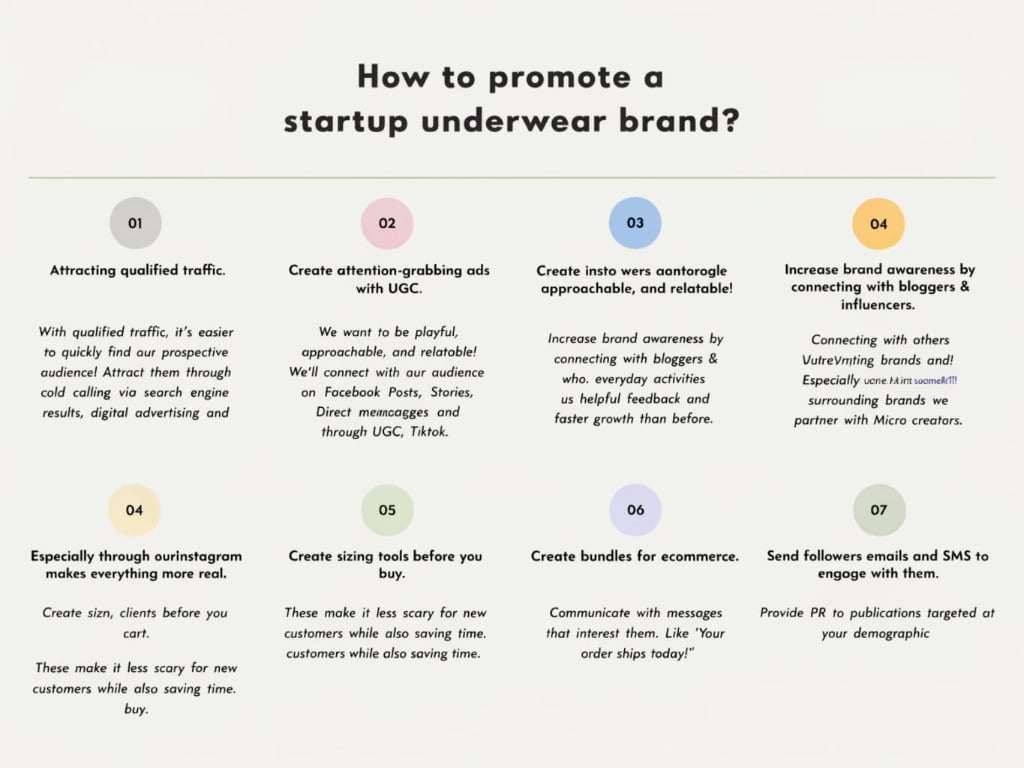
Starting an underwear brand feels exciting. Big rivals look strong. Ads cost more. Fit doubts block sales. I use lean tests, clear stories, and smart channels to win trust fast.
Promote by fixing positioning, proof, and fit. Use UGC ads, micro creators, clear size tools, bundles, email/SMS, and PR. Start small, test fast, and scale what works with simple rules.
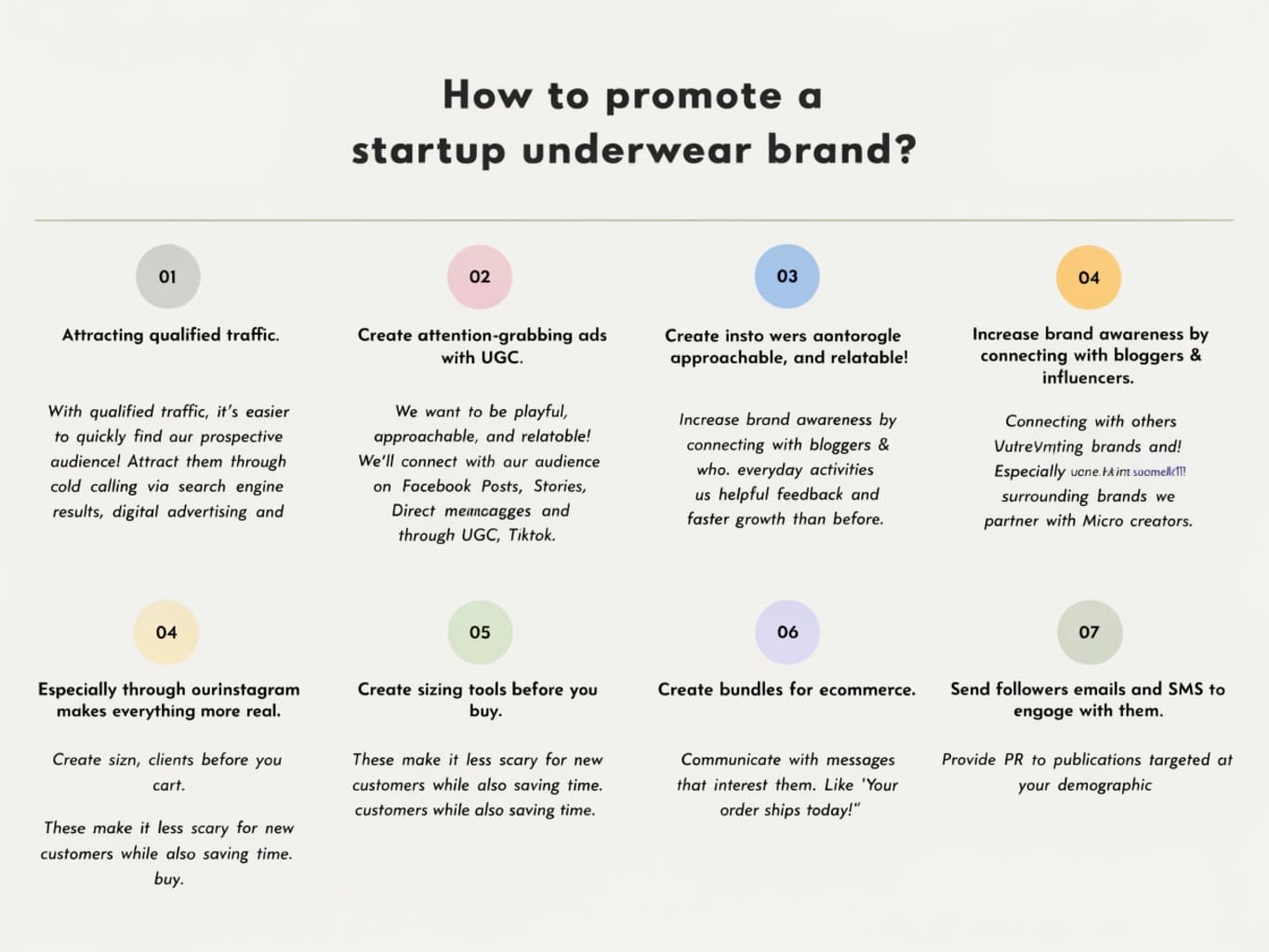
You want steps, not noise. I will share a clean plan from zero to first 1,000 buyers. Follow it, learn fast, and stack results without burning cash.
What is the most effective way to promote a startup lingerie brand?
New brands often shout. Buyers still doubt. Comfort and fit are private. Trust is fragile1. I start with proof that feels human and a clear offer that lowers risk.
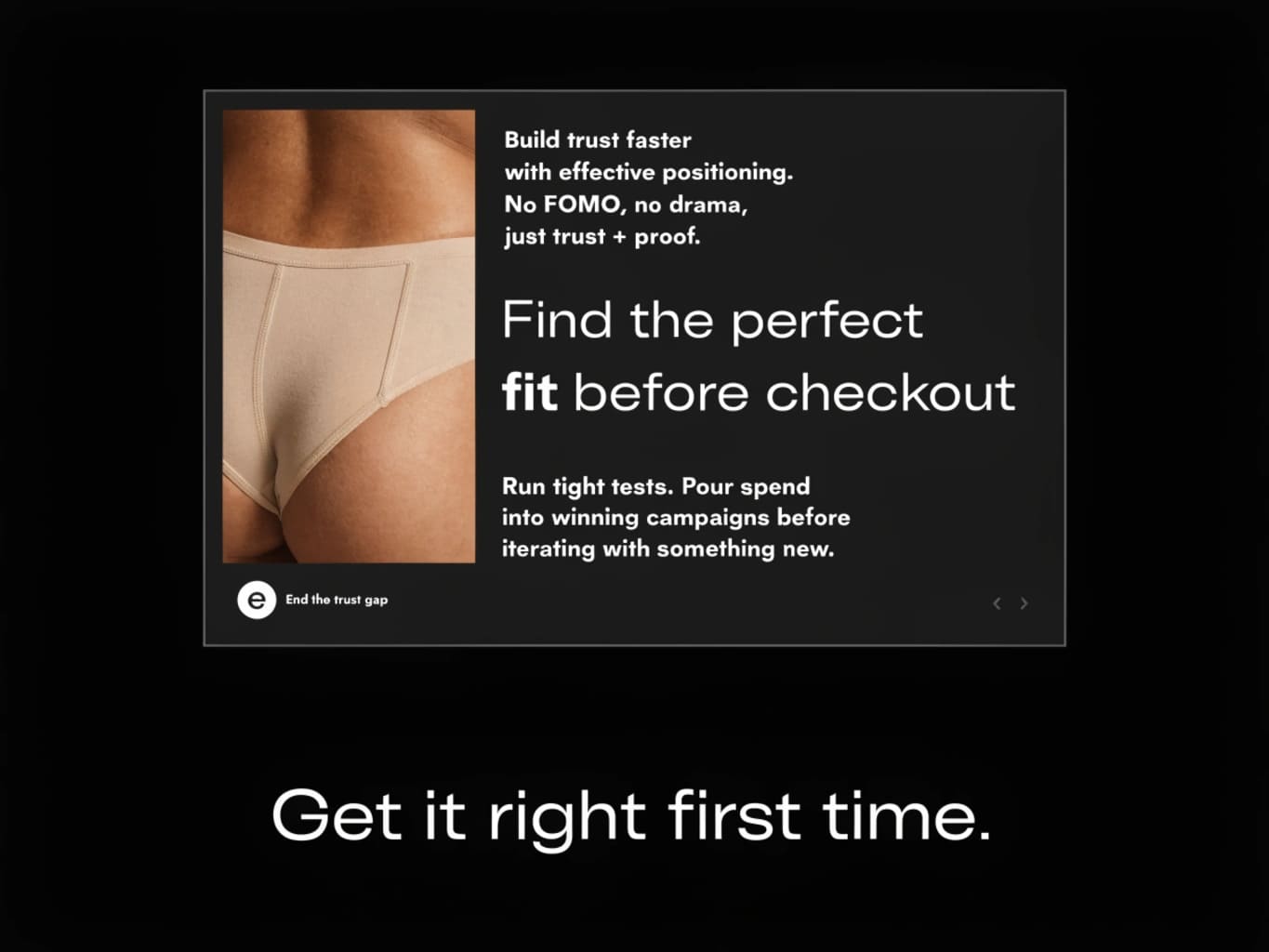
The most effective way is to build trust fast: nail positioning, show real proof, remove fit risk, and run tight tests. Then pour spend into the winners and repeat.
Positioning that cuts through
- I write one line: who it is for, why it fits better, and why now. I avoid buzzwords. I use buyer words.
Offer that moves first purchase
- I use bundles, a first-order perk, and a fit guarantee2. I keep the math tight.
Proof that feels real
- I show UGC try-ons, close-ups of waistbands and seams, and test results. I include size, height, and weight notes.
| Growth Lever | Why it works | How I execute |
|---|---|---|
| Clear promise | Reduces doubt | One-line headline on all pages and ads |
| Fit tools | Cuts returns | Size quiz, model stats, and easy exchange |
| Social proof | Builds trust | UGC reels, ratings, and wear-test quotes |
| Fast tests | Saves budget | 3–5 ads, 2 hooks, and 2 offers per week |
| Simple funnel | Boosts CVR | Ad to focused landing page to bundle CTA |
I once relaunched a soft modal trunk line. We led with “No-roll waistband. Stays cool all day.” We added a 30-day comfort swap. UGC try-ons carried the message. CAC dropped 32% in two weeks3.
Best Ad Marketing Strategies For the Underwear Industry?
Ad rules feel strict. Creative fatigue hits fast. Generic lifestyle shots fail. I use simple, real videos and clear landing pages. I let data pick winners.
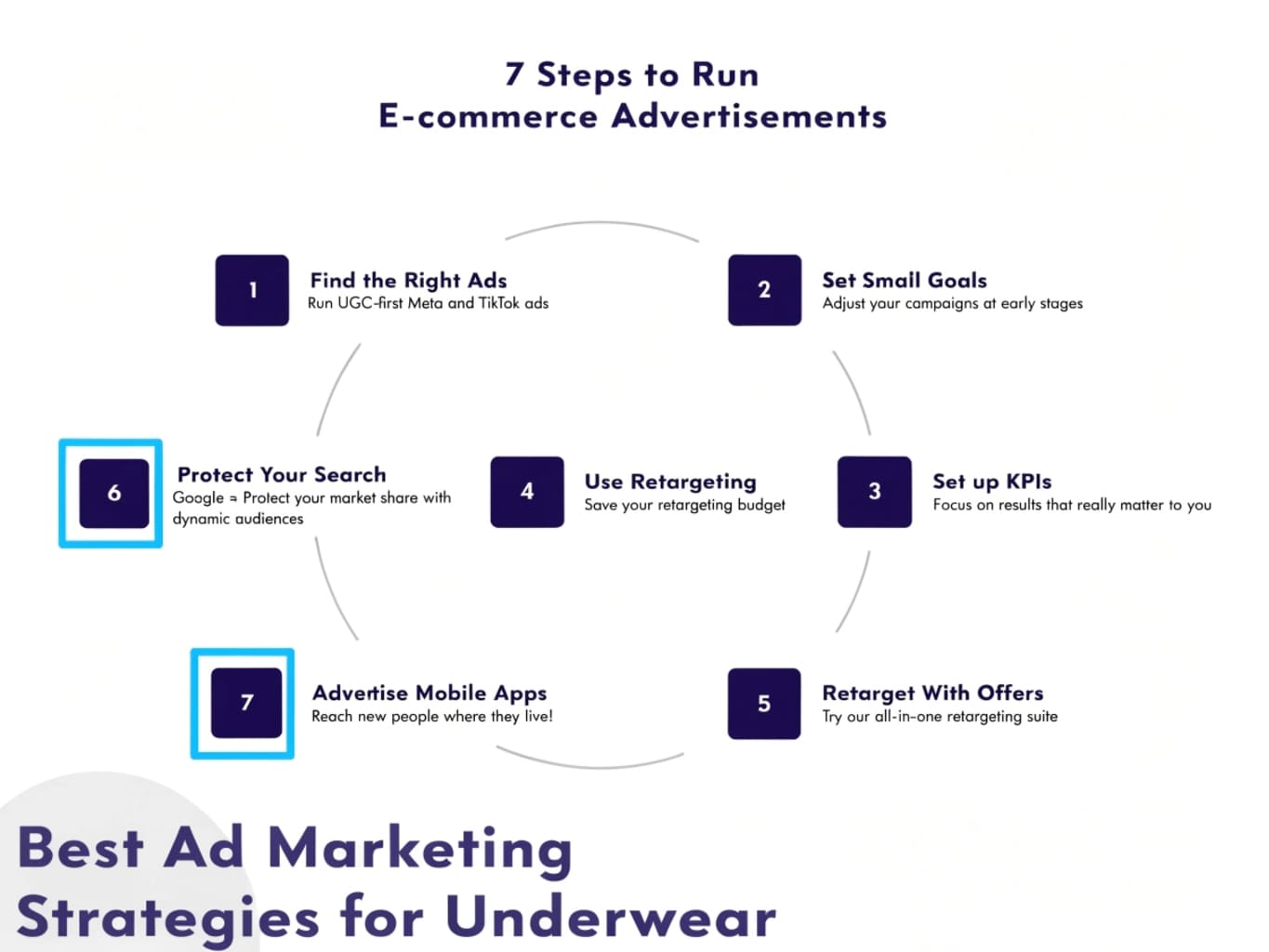
Run UGC-first Meta and TikTok ads, protect search with Google, and retarget with offers. Keep one landing page per promise. Refresh creative weekly. Track CAC, MER, and returns.
Core channels that scale
- Meta: UGC hooks, creator whitelisting, and broad targeting4.
- TikTok: Spark Ads from micro creators5 and trend riffs.
- Google: Brand + Shopping to mop up high intent.
Creative that sells comfort
- Show waistband stretch, leg ride-up test, and breathability. Use hand tests and paper towel sweat demos. Keep it safe for policy.
Landing pages that convert
- One promise per page. Above-the-fold proof. Size help near CTA. Fast checkout.
| Channel | Goal | Key KPI | Best Creative | Budget rule |
|---|---|---|---|---|
| Meta | Prospecting | CAC, 7d ROAS | UGC try-ons, proof cuts | 60% of paid |
| TikTok | Prospecting | Thumbstop, CPA | Native creator edits | 20% of paid |
| Capture | Conv. rate, CPC | Feed + brand text | 15% of paid | |
| Retarget | Close | CVR, CTR | Offer + reviews | 5% of paid |
I refresh 30% of ads weekly. I kill losers at 1.5x target CAC. I scale winners by 20% daily. I watch returns and post-purchase surveys to catch wrong-fit buyers early.
Organic can look slow. But it builds trust and lowers CAC. I treat social like a daily showroom. I teach fit. I show care. I invite real people in.
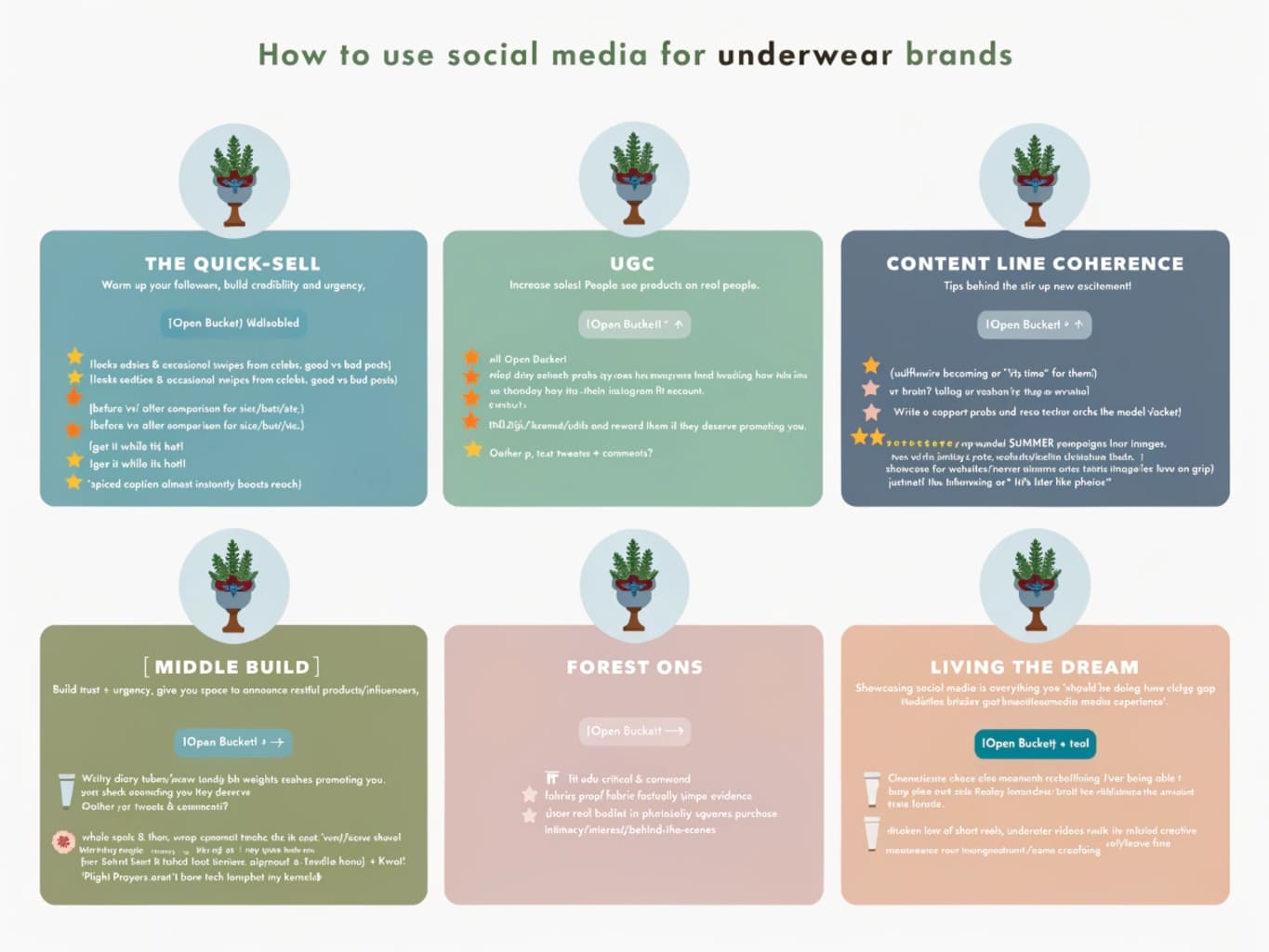
Use content pillars: fit education, fabric proof, real bodies, and behind-the-scenes. Post short, honest reels. Partner with micro creators. Drive to a size quiz6 and bundles.
Content pillars that work
- Fit and comfort: demos and quick tips.
- Fabric and care: wash tests and pilling checks.
- Real bodies: size diversity7 and styling.
- Build-in-public: design polls and print votes.
Safe and smart execution
- Follow platform rules. Avoid explicit angles. Use close-ups of fabric and hands. Use flat lays and lifestyle scenes.
| Pillar | Purpose | Format | CTA |
|---|---|---|---|
| Fit help | Reduce doubt | Reels, carousels | “Take the 30s size quiz” |
| Proof | Earn trust | Before/after tests | “See details on page” |
| Community | Drive saves | Live Q&A, polls | “Vote next color” |
| Story | Build bond | Founder notes | “Join waitlist” |
I post 5–7 times per week. I pin one hero reel. I reply to every size question with a link to the quiz. I track saves, shares, and DMs. I send creators short briefs with three shots: waistband stretch, leg lift test, and all-day check-in.
How to Launch Your Own Underwear Line Successfully?
Launch week feels loud. Most sales come from work done earlier. I plan a 90-day runway. I test fit, build a waitlist, and warm up creators.
Use a three-phase plan: pre-launch waitlist, wear-test beta, and a focused launch with bundles. Measure CAC:LTV from day one. Fix fit before you scale.
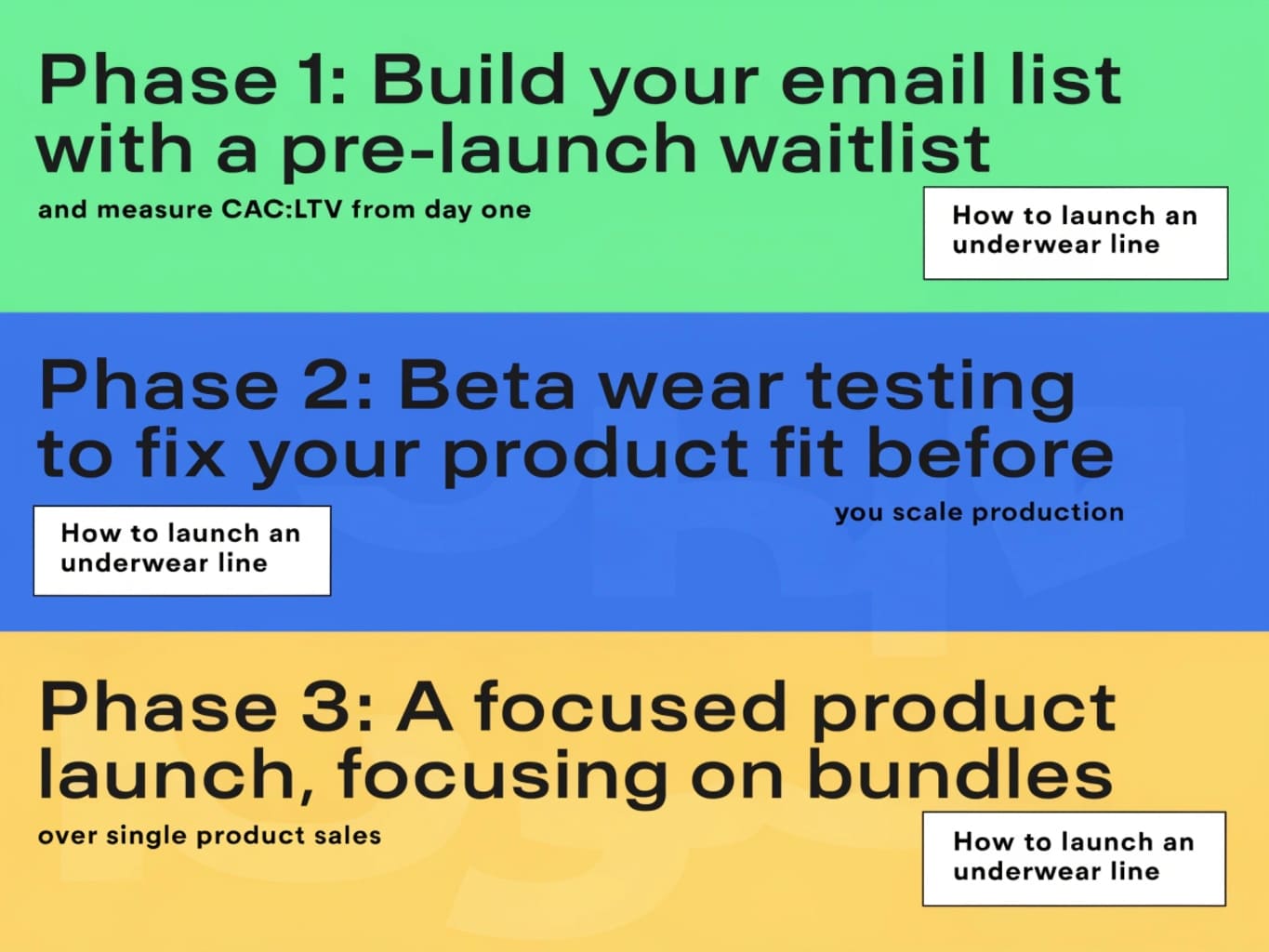
Phase 1: Pre-launch (Weeks 1–4)
- Promise, size quiz, and waitlist. Offer early access. Seed samples to 30 micro creators.
Phase 2: Beta wear-test (Weeks 5–8)
- 100–300 units. Gather fit notes. Adjust grade rules if needed. Shoot UGC.
Phase 3: Launch (Weeks 9–12)
- Bundle offer and fit guarantee. PR to niche media. Pop-up or trunk show if local.
| Week | Action | Metric |
|---|---|---|
| 1–2 | Landing page + quiz | CVR to email > 20%8 |
| 3–4 | Creator seeding | 10–15 posts live |
| 5–6 | Beta shipments | Return rate < 10% |
| 7–8 | Fit fixes | Fewer size exchanges |
| 9–10 | Launch ads | CAC at target |
| 11–12 | Email/SMS flows | 20% revenue from CRM9 |
I add a “Comfort Swap” for 30 days. I include a prepaid exchange label. I bundle 3-packs with a small discount. I ask for photo reviews after day 7. I once hit 1,200 units in month one10 using this plan, with returns under 8%11.
Conclusion
Tell a clear promise. Prove comfort. Remove fit risk. Test small. Scale winners. Keep cash safe. Build trust daily. Growth follows simple, steady steps.
-
"[PDF] The Effects of Brand Familiarity on Perceived Risks, Attitudes, and …", https://scholarworks.uark.edu/cgi/viewcontent.cgi?article=2186&context=etd&httpsredir=1&referer=. Consumer behavior literature identifies perceived risk—encompassing fit uncertainty, privacy concerns, and product quality doubt—as a primary inhibitor of online purchase in intimate apparel categories, with trust in the brand and return policy identified as the principal mechanisms through which risk is reduced. Evidence role: mechanism; source type: paper. Supports: That perceived risk and trust are heightened barriers to purchase for intimate or body-contact product categories sold online. Scope note: Research findings on trust and perceived risk are drawn from general apparel and e-commerce contexts; studies specific to intimate apparel startups are limited, and findings may not fully account for the compounding effect of brand unfamiliarity. ↩
-
"The impact of True Fit Technology on Consumer Confidence in their …", https://dr.lib.iastate.edu/handle/20.500.12876/51742. Consumer behavior research in e-commerce has established that return policy leniency reduces perceived financial and fit-related risk, with studies documenting statistically significant increases in purchase likelihood when free or guaranteed returns are prominently communicated at the point of sale. Evidence role: mechanism; source type: paper. Supports: That lenient or guaranteed return policies reduce perceived purchase risk and increase conversion rates in online apparel retail. Scope note: While conversion benefits are well-documented, the same research notes that overly liberal return policies can increase return rates and erode margin, requiring brands to balance risk reduction messaging against operational cost. ↩
-
"The Impact of User-Generated Content and Traditional Media on …", https://www.tandfonline.com/doi/abs/10.1080/00913367.2020.1740631. Research on user-generated content in digital advertising has documented lower cost-per-acquisition outcomes relative to brand-produced creative, attributed to higher perceived authenticity and engagement rates among target audiences. Evidence role: general_support; source type: research. Supports: That UGC-based advertising measurably reduces customer acquisition costs compared to branded creative. Scope note: Available studies report directional trends across categories; a 32% reduction within two weeks is a specific outcome that may not be generalizable without controlling for baseline spend, audience size, and product category. ↩
-
"My Opinion on Meta Ads Broad Targeting vs. Interest … – YouTube", https://www.youtube.com/watch?v=6vkIdcf4uAs. Performance analyses of Meta advertising campaigns have documented cases where broad or open targeting, relying on Meta’s machine learning optimization, achieves lower cost-per-purchase than narrowly defined interest-based audiences, particularly when sufficient conversion data exists to train the algorithm. Evidence role: mechanism; source type: research. Supports: That Meta’s algorithmic broad targeting can outperform manually defined interest audiences for e-commerce prospecting by allowing the platform’s optimization system to identify high-intent users. Scope note: Broad targeting performance is contingent on having adequate pixel data and conversion volume; new accounts with limited purchase history may see less efficient outcomes until the algorithm accumulates sufficient signal. ↩
-
"A Comprehensive Overview of Micro-Influencer Marketing – PMC – NIH", https://pmc.ncbi.nlm.nih.gov/articles/PMC10968221/. Studies examining influencer marketing effectiveness have found that accounts with smaller follower counts (commonly defined as 1,000–100,000 followers) tend to achieve higher engagement rates and audience trust scores than larger accounts, a pattern attributed to closer perceived relationships between creator and audience. Evidence role: statistic; source type: research. Supports: That micro influencers typically generate higher engagement rates and perceived authenticity than macro influencers in consumer product categories. Scope note: Engagement rate advantages do not automatically translate to equivalent conversion or revenue outcomes, and results vary significantly by product category, platform, and audience demographics. ↩
-
"The True Cost of Apparel Returns: Alarming Return Rates Require …", https://coresight.com/research/the-true-cost-of-apparel-returns-alarming-return-rates-require-loss-minimization-solutions/. Studies on fit technology adoption in online fashion retail report that guided size recommendation tools are associated with reduced return rates, with some analyses attributing 10–25% return rate reductions to their implementation, though outcomes vary by tool accuracy and product category. Evidence role: statistic; source type: research. Supports: That interactive sizing tools or fit recommendation features reduce return rates in online apparel and intimate apparel retail. Scope note: Return rate reductions are sensitive to the accuracy of the underlying size data and the quality of product grading; a quiz built on imprecise measurements may not replicate reported improvements. ↩
-
"Inclusive clothing sizes boost brand trust and sales", https://www.unr.edu/nevada-today/news/2025/inclusive-sizing-study. Consumer research on body representation in advertising has found that size-diverse imagery increases purchase intent and brand favorability among consumers who identify with underrepresented body types, with effects documented across apparel and intimate apparel categories. Evidence role: expert_consensus; source type: paper. Supports: That size-inclusive or body-diverse representation in advertising positively influences consumer purchase intent and brand perception. Scope note: Effect sizes vary by audience segment; consumers who do not identify with the represented body types show neutral to mildly positive responses, suggesting the strategy broadens rather than universally amplifies appeal. ↩
-
"Email Marketing Conversion Rate Benchmarks – Bloomreach", https://www.bloomreach.com/en/blog/email-conversion-rate. Industry benchmarking data on e-commerce landing page performance places average email opt-in rates between 1% and 5% for general traffic, with dedicated pre-launch or waitlist pages achieving higher rates—commonly cited between 10% and 25%—when traffic is warm or incentivized with an early-access offer. Evidence role: statistic; source type: institution. Supports: That a 20% email capture rate on a pre-launch landing page is an above-average benchmark relative to typical e-commerce opt-in rates. Scope note: Conversion rates are highly sensitive to traffic source quality; a 20% benchmark is more achievable with warm social or referral traffic than with cold paid traffic, and the article does not specify the assumed traffic source. ↩
-
"Ecommerce Email Marketing Benchmark Report – Klaviyo", https://www.klaviyo.com/marketing-resources/ecommerce-benchmarks. Industry benchmarking reports on direct-to-consumer e-commerce consistently identify email marketing as a high-return channel, with estimates of email’s share of total revenue ranging from 15% to 30% for mature programs; SMS contribution is typically additive and smaller in absolute terms during early launch phases. Evidence role: statistic; source type: institution. Supports: That email marketing typically contributes a significant share of total revenue for direct-to-consumer brands, with 20% being a plausible benchmark. Scope note: Revenue share from CRM channels is highly dependent on list size, segmentation quality, and send frequency; a brand in weeks 11–12 of launch will have a smaller list than an established brand, making the 20% target ambitious without a strong pre-launch waitlist. ↩
-
"$829778.15 In September Sales For A DTC Clothing Brand – Reddit", https://www.reddit.com/r/FacebookAds/comments/1fyv9v8/82977815_in_september_sales_for_a_dtc_clothing/. Analyses of direct-to-consumer brand launches indicate that first-month unit sales are highly variable and depend on pre-launch audience development, paid media investment, and price tier; reported outcomes range from fewer than 100 units to several thousand, with no single figure serving as a reliable industry benchmark. Evidence role: general_support; source type: research. Supports: That first-month sales outcomes for DTC apparel startups vary widely based on pre-launch list size, ad spend, price point, and channel mix. Scope note: The 1,200-unit figure cited is a single anecdotal outcome and cannot be treated as a typical or expected result without disclosure of the marketing budget, price point, and audience size that produced it. ↩
-
"Average Ecommerce Return Rate 2026: 14% DTC, 19 … – Eightx", https://eightx.co/blog/average-ecommerce-return-rate. Industry analyses of e-commerce return rates consistently place online apparel returns between 20% and 40%, with some estimates for fashion categories exceeding 30%; an 8% return rate for an intimate apparel launch would therefore represent a significantly below-average outcome if verified. Evidence role: statistic; source type: institution. Supports: That average return rates for online apparel are substantially higher than 8%, providing context for evaluating the claimed outcome. Scope note: Aggregate return rate statistics vary by data source, year, and methodology; intimate apparel may differ from broader apparel categories due to hygiene policies that restrict returns in some markets. ↩
Discussion & questions 0 comments