

What Should Brands Include in a Custom T-Shirt RFQ?
Every brand that reaches out to a manufacturer starts with the same goal: get an accurate quote quickly. But custom T-shirt RFQs are where that goal quietly falls apart. When key details are missing, suppliers either guess or ask — and both outcomes cost you time, money, and sometimes an entire sampling round.
A custom T-shirt RFQ should include the style and fit, fabric requirements, available measurements, decoration and placement, quantity by style/color/size, destination and timing, relevant compliance requirements, and packaging. Mark unresolved details clearly. A first estimate can use stated assumptions; a comparable production quote needs an agreed specification and cost scope. Price gaps can reflect different assumptions as well as genuine supplier differences.

RFQ overview illustration. The graphic’s “40% price gap” note is not used as a verified benchmark in this guide. Compare the written specifications and quote scope below.
The structure of your RFQ determines the quality of the quotes you receive. Below, I’ll walk through the most common gaps I see in submitted RFQs — and what those gaps actually cost brands downstream.
What Product Specifications Should a T-Shirt RFQ Include?
Sourcing custom T-shirts without the right supplier documentation is like placing a furniture order without specifying wood type or dimensions. The product will arrive — just not the one you imagined.
Before you can source custom T-shirts and tank tops reliably, you need three foundational parts of the brief: a fabric specification, a size specification, and decoration details. Each serves a different function. At the first RFQ stage, they can be working notes with clearly marked open decisions; before production, the relevant details need to be agreed.

Fabric Specification: "100% Cotton" Is Not a Spec
When a brand writes "100% cotton" in an RFQ, it looks complete. It isn’t. Cotton is a category, not a specification. What the supplier actually needs to price accurately is:
- Fiber composition percentage — Is it 100% cotton, or 95% cotton / 5% elastane for stretch?
- GSM (grams per square meter) — State the fabric weight, but review it together with the fiber, yarn, construction and finish. Hand feel is influenced by several interacting properties.1 A 160 GSM tee and a 220 GSM tee should not be treated as the same fabric specification; neither number alone establishes quality.
- Yarn type — State whether you want ring-spun or open-end yarn, if you have a preference.2 Record any combed or carded requirement separately. Do not treat these terms as one universal quality ladder; compare the proposed fabric and its actual hand feel.
- Fabric construction — Single jersey, interlock, piqué — each has different applications and different pricing.
When a brand leaves GSM blank, we typically have to send a follow-up question before the quote can even begin. If the team is managing multiple RFQs that week, yours sits in a queue. That’s not a complaint — it’s just the operational reality.
More importantly, if you don’t specify GSM and a supplier quotes you, they’ve made an assumption. Maybe they quoted an available 160 GSM fabric. You expected 220 GSM because that was the specification of your reference tee. The quote looked great until the sample arrived.
What to include: State the GSM target or range, fiber percentages, knit construction, any yarn and combing preferences, color reference, and any required finish or material certification. More on certifications below.
Size Specification: Not a Footnote
This is the most consistently underestimated part of an RFQ. Brands frequently attach a single-size measurement or write "S/M/L/XL — standard sizing." From a manufacturer’s perspective, that phrase means almost nothing.
Sizing labels vary by market and brand; “medium” does not establish finished-garment measurements. Separate the target body measurements from the dimensions of the T-shirt itself.3 A chest or sleeve-length difference may look small on paper, but incorrect grade increments can change the mismatch across the size run.
What an RFQ should include at this stage:
| Spec Type | What to Provide |
|---|---|
| Base measurements | Chest, body length, sleeve length and shoulder width, with units and measurement points; add agreed tolerances when available |
| Grade increments | How each measurement changes per size step |
| Size label reference | US, EU, UK, or brand’s own sizing label |
| Fit intent | Relaxed, slim, oversized, boxy |
| Reference sample | Existing garment or competitor product for comparison |
If you’re at an early stage and don’t have a full spec sheet, say so clearly in the RFQ. Ask whether the manufacturer can provide a base block for review — make clear that development is needed, rather than asking them to match an assumed standard. Agree the sampling and prototyping scope before treating the measurements as approved.
What Decoration Details Should Brands Include in the RFQ?
Brand presentation starts at the product itself. The visual and tactile consistency of a T-shirt, the hang tag, the packaging insert and the label inside the collar all need to be connected to the sourcing brief.
When brands think about promotion in isolation from sourcing, they often create a disconnect: the marketing team promises a premium feel, but the sourcing brief doesn’t specify the details that produce it.

Branding concept illustration. The pictured promotional copy is not evidence of market ranking or a completed client project; confirm the actual artwork and finish in your brief.
Make Your Decoration Method a Procurement Decision
The most common RFQ mistake I see from early-stage brands is submitting a logo file as a proxy for a decoration brief. A logo file tells a supplier what the artwork looks like. It does not tell them how you want it applied — and that’s a different decision entirely.
Here’s why it matters:
Screen printing can be cost-effective at scale, but the ink system, fabric and curing affect the result. It also has setup costs related to the screens and print plan, which matter when comparing small runs or multi-color designs. Ask how setup and repeat-order charges are quoted.
Embroidery can communicate a premium, structured aesthetic. It adds weight and dimension to a logo. Its cost depends on factors such as stitch count, digitizing and complexity; fine lines and gradients may need to be simplified. Ask for a sample on the intended fabric.
Heat transfer can offer flexibility for small runs or photographic and gradient artwork, depending on the transfer process. Durability varies significantly by transfer type and application conditions. Ask which process is being priced rather than accepting “heat transfer” as a complete specification.
DTG (direct-to-garment) printing can suit short runs and complex artwork, but fabric suitability, any pre-treatment and curing need to match the printer and ink system. Confirm availability and sample results for your selected fabric.
Choosing a decoration method is not purely a design decision — it determines MOQ thresholds, per-unit cost, durability profile, and in some cases, fabric eligibility. A brand that promotes a "premium hand feel" tee should be asking whether their decoration method is consistent with that positioning.
Include in your RFQ:
- Preferred decoration method (or ask for options with MOQ and pricing breakdown)
- Artwork file in vector format where possible
- Placement details (center chest, left chest, back neck label, sleeve — with measurements)
- Color matching reference where needed (a specified Pantone system/code or an approved physical standard, rather than only “navy blue”)
What Packaging and Label Details Affect the Quote?
Branded merchandise works when it’s useful, well-made, and consistent with how your brand looks and feels everywhere else. A custom T-shirt is often the starting point — but what makes it "merch" rather than just a garment is the level of intentional detail in the customization.
The RFQs we receive often get delayed because the brand hasn’t thought through what "custom" actually means to them at the product level.
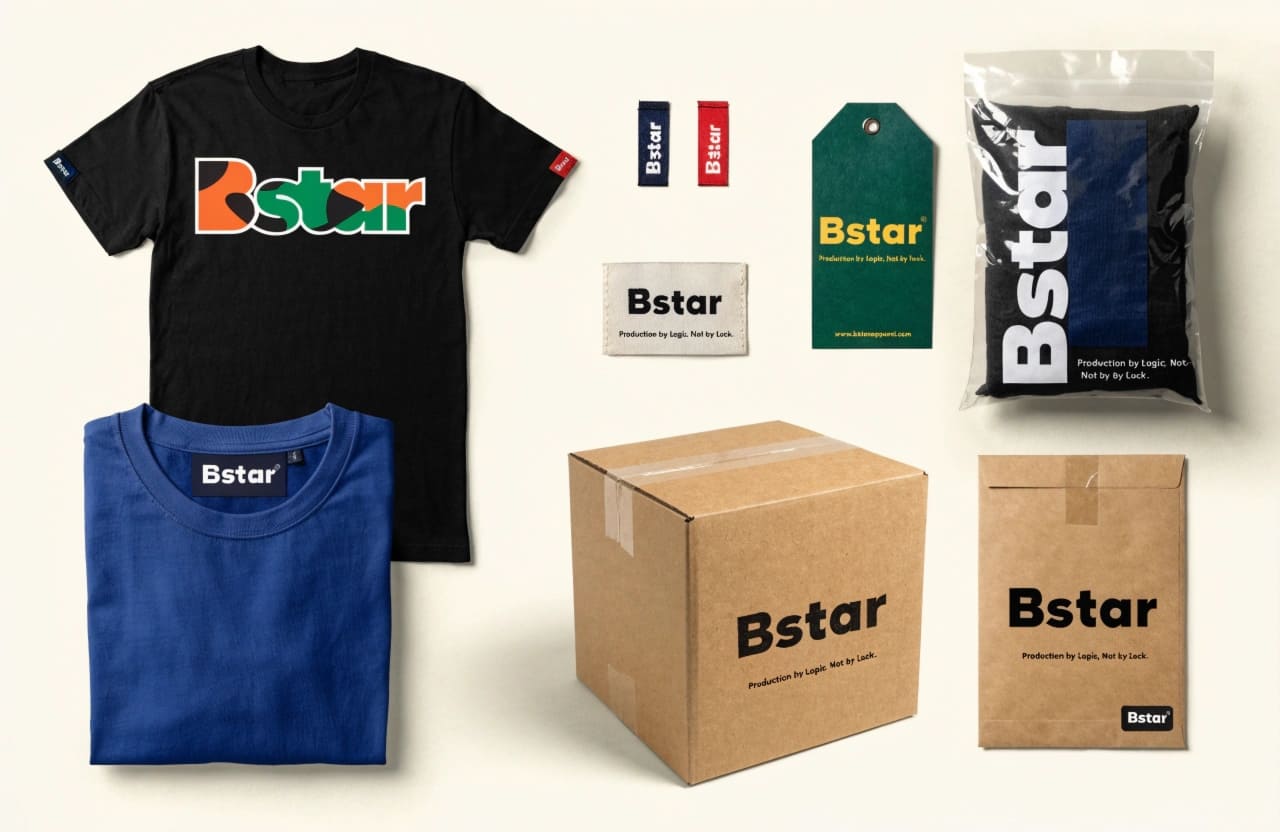
Packaging and Labels Are Part of the Brief
Many brands treat packaging as a post-production conversation. By then, it’s already a scheduling and cost problem. If you want a woven label instead of a printed one, that affects production lead time. If you want a recycled poly bag instead of standard packaging, that needs to be declared upfront.
Items worth specifying in your initial RFQ:
- Main label: Woven, printed, heat transfer neck label, tearaway option
- Care and product labels: Identify the destination market and confirm the applicable fiber, care, origin, business-identity and language requirements; these are not interchangeable across markets.4
- Hangtag: Paper stock, size, attachment method and any proposed certification logo, subject to the relevant authorization and scope
- Polybag: Clear vs. frosted, individual vs. set packaging, recycled material options
- Carton details: Pack quantity per carton, carton dimensions, shipping mark requirements
When brands include this in their RFQ, garment and packing costs can be quoted on a clearer basis. A landed-cost estimate also needs the delivery term, destination, freight, duties and other applicable charges. When packaging is left undefined, the later conversation can add cost and timeline pressure.
What Compliance, Quantity and Delivery Details Belong in the RFQ?
Successful T-shirt brands tend to have one thing in common: they built a repeatable sourcing process early. That process starts with how they communicate with suppliers — and the RFQ is the first signal a factory receives about how organized and serious a brand is.
An RFQ that’s clear about the product and its open decisions tells a supplier what needs to be priced and what still needs development. It can reduce avoidable questions and sampling revisions, but it does not guarantee a shorter schedule or priority during busy periods.
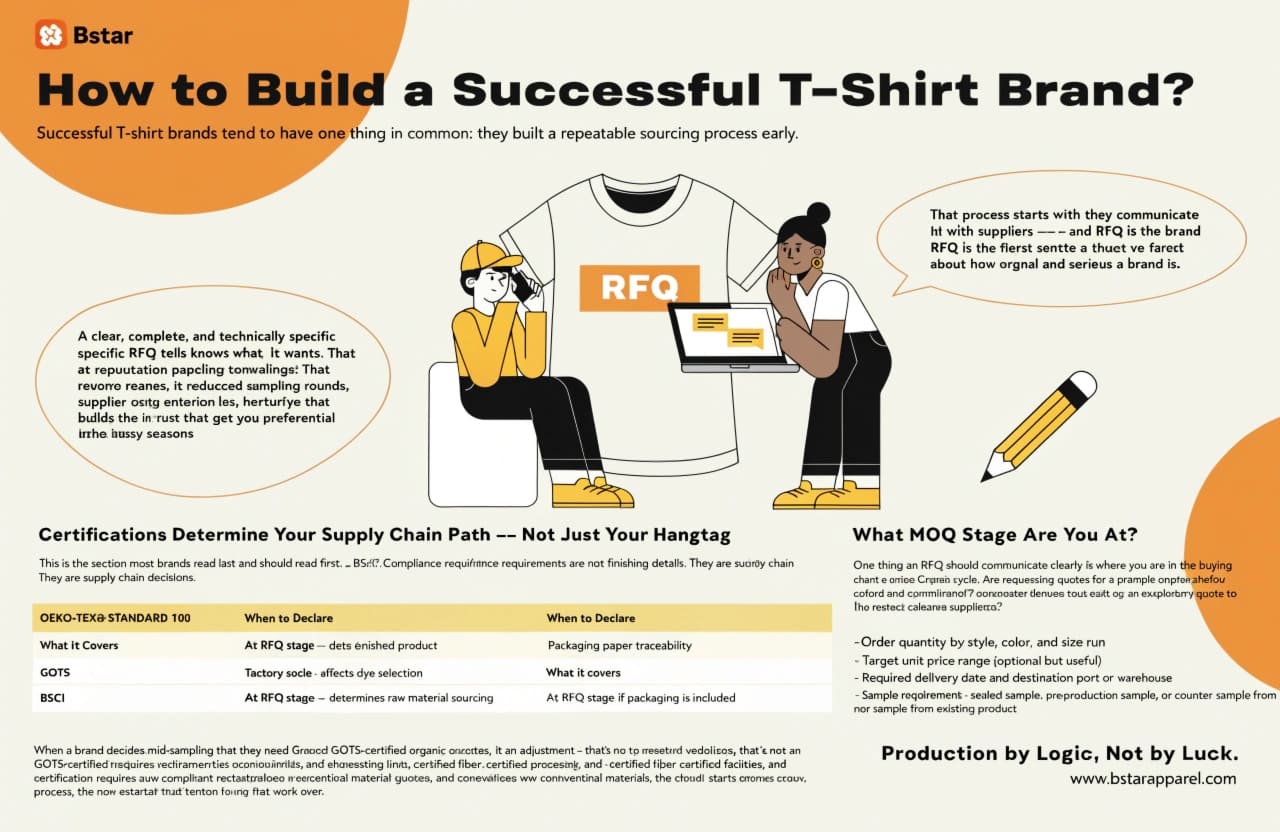
Communication concept illustration. Use the written certification table below for scheme scope and document checks; the graphic is not evidence of certification or guaranteed supplier priority.
Certifications Determine Your Supply Chain Path — Not Just Your Hangtag
This is the section most brands read last and should read first. Compliance requirements are not finishing details. They are supply chain decisions.
When a brand decides mid-sampling that it needs a GOTS-certified finished product, that can change the sourcing and production route. GOTS includes organic fiber, processing, chemical and traceability requirements within the certified supply chain.5 If the original route cannot support the intended claim, materials, suppliers and samples may need to be reviewed again. Buying GOTS-certified fabric alone does not automatically make the finished T-shirt GOTS-certified.
OEKO-TEX® STANDARD 100 assesses harmful substances in the certified textile article, from yarns to finished products.6 A fabric certificate does not automatically establish that all labels, print, trims and the finished T-shirt are covered. Declare the required article and product class early.
Requirements to clarify with the supplier include the following. BSCI is a social auditing system, while FSC chain of custody concerns eligible forest-based material flows such as paper packaging.7
| Requirement | What to Check | When to Declare |
|---|---|---|
| OEKO-TEX® STANDARD 100 | Certified article, product class, holder, validity and relevant components | At RFQ stage, before materials and decoration are approved |
| GOTS | Intended material or finished-product claim, certified chain and applicable documentation | At RFQ stage, before choosing the sourcing route |
| amfori BSCI | Audit report for the actual production site and buyer acceptance; not a product certificate | At supplier selection stage |
| FSC | Relevant paper-packaging claim, chain-of-custody scope and logo authorization | At RFQ stage if applicable packaging is included |
Treat certification requirements as part of supplier and material selection. Declaring them upfront helps identify whether the proposed route can support the intended claim; ask for evidence before relying on it.
At BSTAR, GOTS-certified fabric sourcing can be discussed through appropriately certified suppliers. The selected material, documents and order scope still need review; this is not a blanket claim that BSTAR’s factory or every finished garment is GOTS-certified.
What MOQ Stage Are You At?
One thing an RFQ should communicate clearly is where you are in the buying cycle. Are you requesting quotes for a production order? A sampling run to confirm specs before committing? Or an exploratory quote to evaluate suppliers?
Each of these requires a different level of detail, and experienced manufacturers will respond differently to each. An exploratory quote at low volume can be accommodated with a less complete brief. A production order cannot.
State clearly:
- Order quantity by style, color, and size run
- Target unit price range (optional but useful)
- Required delivery date and destination port or warehouse, distinguishing the ex-factory date from the date you need stock to arrive
- Sample requirement — development/counter sample, fit review or pre-production approval, with the purpose and available references stated
Ask the supplier to separate garment, fabric, decoration and packaging minimums. A total collection quantity may not satisfy every component minimum; use MOQ and order planning to structure those questions.
A Copyable T-Shirt RFQ Checklist
Use one version of this brief for every supplier. Write “to be developed” where a decision is open, and ask which assumptions their estimate uses.
| RFQ Field | What to Send |
|---|---|
| Project and stage | Brand/contact, style code, revision date, initial estimate or production quote |
| Style and fit | Reference images, neckline, sleeve, intended wearer, fit and available measurements |
| Fabric and color | Composition, knit, GSM, finish, color reference and confirmed or open requirements |
| Decoration | Artwork, method or options requested, final dimensions and placement |
| Quantity breakdown | Units by style, color and size; identify any mix still being planned |
| Labels and packing | Artwork, market requirements, pack format and any buyer specifications |
| Sample and approvals | Reference available, development needed and approvals still outstanding |
| Delivery and quote scope | Destination, target arrival/ex-factory date, delivery term, inclusions, exclusions and quote validity |
Attach a quantity matrix rather than only a collection total:
| Style / Color | S | M | L | XL | Row Total |
|---|---|---|---|---|---|
| [Style A / color 1] | [units] | [units] | [units] | [units] | [sum] |
| [Style A / color 2] | [units] | [units] | [units] | [units] | [sum] |
Replace the example size columns with your actual size range. These placeholders are a buyer worksheet, not a BSTAR minimum-order commitment.
How to Compare the Quotes You Receive
The lowest number is only useful once you know what it covers. Record differences before choosing a supplier.
| Check | What Must Be Comparable |
|---|---|
| Product basis | Same fabric, measurements, color plan, decoration and approved/open details |
| Quantity and minimums | Same style/color/size mix; any material or component minimum explained |
| Cost scope | Currency, garment/packing inclusions, setup and sample fees, tests, freight and other exclusions |
| Timing and validity | Agreed start conditions, sample/approval steps, ex-factory or arrival basis, quote validity and re-quote triggers |
Ask the supplier to identify proposed substitutions and unresolved assumptions in writing. An attractive estimate becomes a useful comparison only when those differences are visible.
Frequently Asked Questions
What is the typical MOQ for custom T-shirts from overseas manufacturers?
MOQs vary by factory, fabric, color, decoration and packing requirements. State your target quantity by style/color/size and ask the supplier to identify garment and component minimums separately. A development sample is different from a small production order; neither establishes a universal MOQ for overseas T-shirt manufacturing.
How do I know if a supplier’s certifications are legitimate?
Request the certificate or audit document, then check the holder, site, standard, product/activity scope and validity against your order. Use OEKO-TEX® Label Check for the relevant label/certificate and the official GOTS certified-suppliers database for GOTS scope checks.8 If records do not match or cannot be found, ask the scheme or certification body to clarify; do not treat a logo screenshot as verification. BSCI reports need a separate review.
Can I submit an RFQ without a complete size spec?
Yes, for an initial estimate. If you don’t have a full graded size chart, note that in your RFQ and ask whether the supplier can provide a base block for review. Ask the quote to identify its assumptions and any development charges. Confirm finished measurements and grading before approving the production specification.
What file format should I use for decoration artwork?
Ask the decorator which formats it accepts. Vector artwork such as AI, EPS or a suitable PDF is useful where applicable, but a file extension alone does not make artwork production-ready. Embroidery also needs digitizing into a stitch file. For raster printing, confirm pixel dimensions at the final print size and the required resolution. Include a specific color reference when matching matters; there is no single DPI rule for every process.
How many quotes should I request before selecting a supplier?
There is no universal number for every brand or order. A manageable shortlist is useful if each supplier fits your product and receives the same RFQ version. More important than the count is identifying what each quote includes, excludes or assumes.
Conclusion
A custom T-shirt RFQ is more than an inquiry form. It starts documenting the commercial and technical basis of your production run. Clear fabric requirements, available size specifications, decoration details, quantities, relevant compliance needs and packaging help suppliers quote on a comparable basis. Open decisions should be visible, with the estimate revised when the agreed specification changes.
From working with overseas brands sourcing custom T-shirts, we see avoidable delays caused by incomplete briefs. If you’re preparing to source custom T-shirts and want useful responses, reach out to our team. We’re happy to review your brief and identify open questions before sampling. You can also review BSTAR’s company and manufacturing background when assessing the supplier fit.
-
A Systematic Review of AI-Driven Prediction of Fabric Properties and Handfeel. Research background on interacting fabric and hand-feel properties; it does not establish a universal T-shirt quality ranking by GSM. ↩
-
National Cotton Council, Yarn Production. Describes ring and open-end spinning as different yarn-production routes; it does not establish one universal softness or price ranking. ↩
-
ISO, ISO 8559-1:2017 — Anthropometric definitions for body measurement. Provides a body-measurement framework; finished-garment dimensions, ease and grading still need their own specification. ↩
-
U.S. Textile Fiber Products Identification rules, 16 CFR Part 303, and European Commission, Textile labels. These are market-specific labeling references, not interchangeable worldwide requirements or a complete care-label checklist. ↩
-
Global Standards, GOTS key features. Covers the certified supply chain, processing criteria and traceability. Check the intended claim and applicable scope rather than relying on fabric composition alone. ↩
-
OEKO-TEX®, STANDARD 100. Explains harmful-substance assessment for certified textile articles and product classes. ↩
-
amfori, BSCI, and FSC, Chain of Custody Certification. BSCI concerns social audits rather than product certification; FSC chain of custody concerns covered forest-based material flows, including relevant paper packaging. ↩
-
OEKO-TEX®, Label Check, and Global Standards, Certified Suppliers Database. Use the appropriate tool and ask the scheme or certification body about unclear or unmatched records. ↩

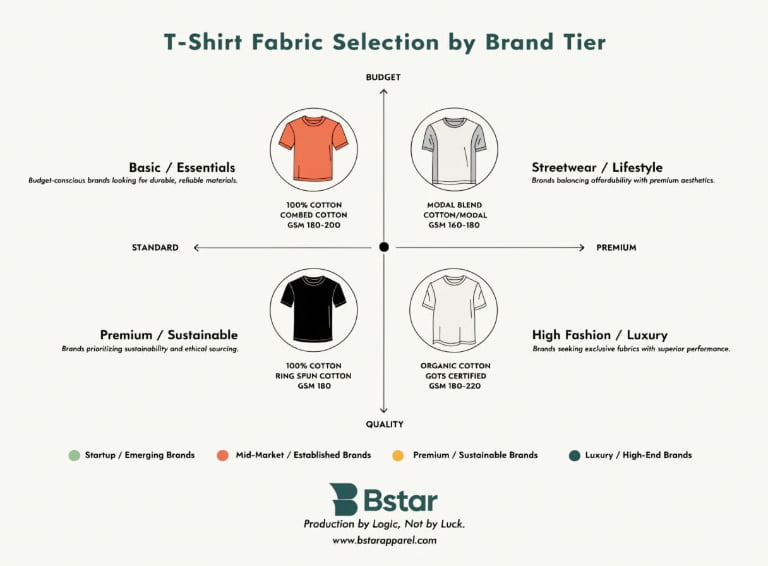
[…] The weights and blends above are discussion examples, not quotes or guaranteed performance tiers. Availability and fabric or component minimums also affect the comparison; clarify them through MOQ and order planning. Record the chosen fabric and open questions in the custom T-shirt RFQ checklist. […]
[…] can turn a reference into usable sample instructions. Adapt the relevant fields in our custom T-shirt RFQ checklist to your tank […]