
BSTAR / Buyer’s manufacturing guide
Men’s Underwear
Manufacturing Guide.
Plan a custom underwear collection from product brief to bulk delivery. Understand the decisions behind style, fabric, fit, sampling, MOQ, cost, quality, packaging and shipping.
Built for founders, product developers and sourcing teams.
Project terms are confirmed after reviewing your specification.

Style, intended wearer, fit, fabric, construction, branding and packaging.
BSTAR’s own factory focuses on sewing, packing and shipment. Fabrics and trims are sourced through long-term suppliers. About BSTAR ↗
Record versions, open items, test requirements and the approved bulk reference.
01 / Product direction
Choose the silhouette by
use, coverage and construction.
The style name is only a starting point. Each silhouette changes the measurements, fit review and construction decisions that must be recorded before sampling.
Close fit with leg coverage and support.
Inseam, rise, pouch volume, leg opening and ride-up control.
Shorter leg with a compact, square proportion.
Leg length, body balance, pouch shape and opening tension.
Relaxed coverage with more ease through the body.
Ease, fly construction, waistband, side seam and hem finish.
No leg coverage with a defined leg curve.
Rise, front and rear coverage, leg shape and edge finish.
Minimal rear coverage with a precise fit.
Rise, strap width, junction shape, seam bulk and edge tension.
Support-focused front with an open rear structure.
Pouch support, elastic placement, connection points and tension.
This table helps define the development brief. For BSTAR’s product capabilities, customisation scope and enquiry route, use the dedicated product page.
View Men’s Underwear capabilities ↗02 / Product development
Turn the idea into
a controlled specification.
A clear development route prevents the sample, quotation and bulk order from being based on different assumptions.
Define the wearer
Target market, use, fit preference, price position and size range.
Build the brief
Sketch, tech pack, reference garment, measurements and construction notes.
Plan materials
Fabric, waistband, labels, artwork, colour, packaging and required documents.
Make & review
Use each sample to answer a specific fit, material or construction question.
Record approval
Identify the approved sample and documents before releasing bulk work.
03 / Fabric specification
Turn a fabric preference
into measurable requirements.
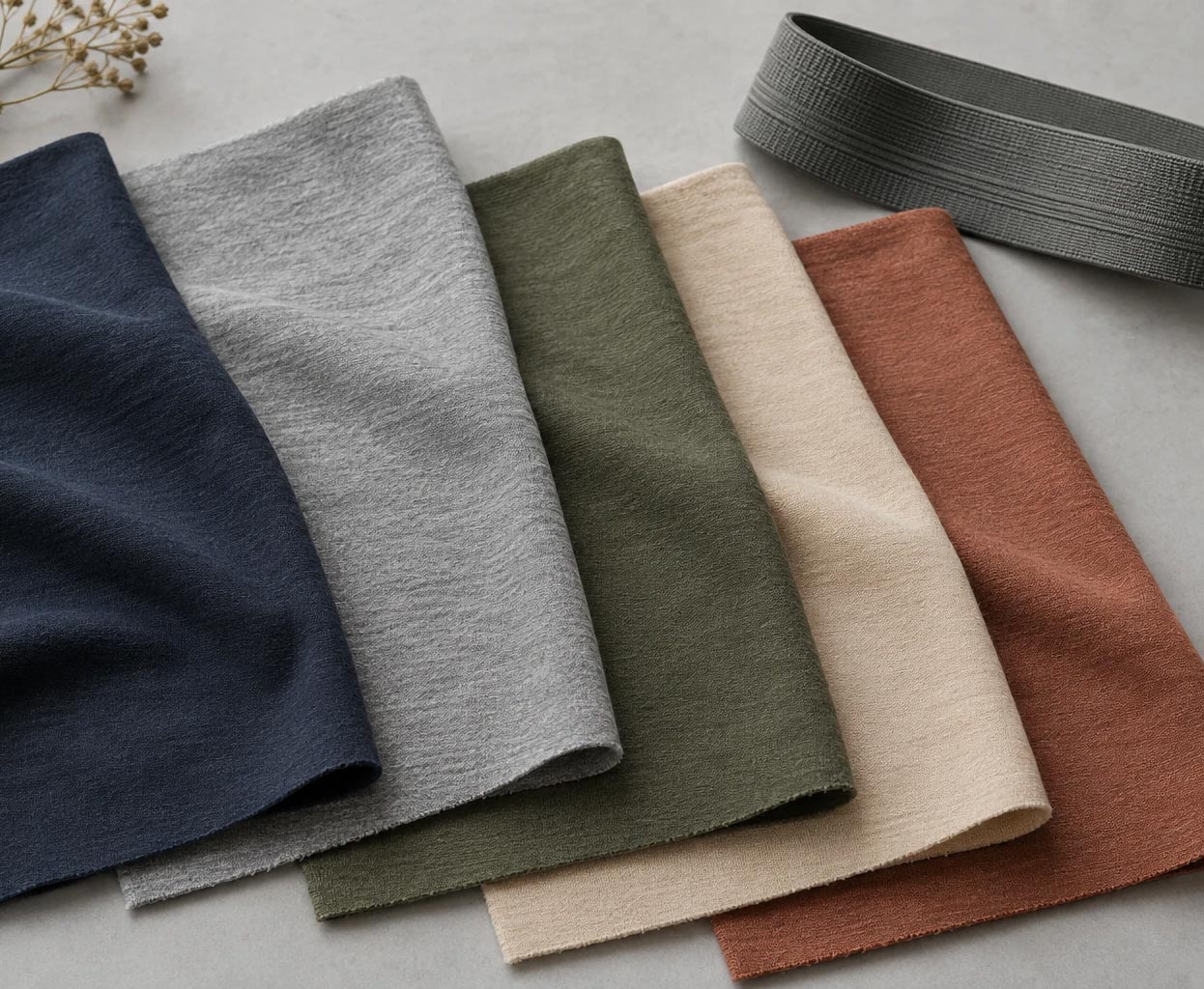
“Cotton”, “modal” or “performance fabric” does not define the finished material. Record the specification and the evidence needed for the intended product.
Identity & construction
Record fibre composition, blend ratio, knit construction, supplier reference and any approved substitute.
Weight & appearance
Agree the target GSM or comparable reference, opacity, surface, colour and hand feel against a physical swatch.
Stretch & recovery
Define the direction and degree of stretch, recovery expectation and how the fabric must work with the selected fit.
Stability & care
Identify shrinkage, colourfastness, pilling, washing and other checks that matter for the product and market.

04 / Fit approval
Review the sample against
recorded decision points.
A fit comment such as “make it more comfortable” is difficult to reproduce. Connect wearer feedback to measurements, photographs and named construction areas.
Base size & method
Name the sample size, measurement points and pattern-grading basis, measuring method and tolerance source.
Rise & coverage
Check front and back rise, seat coverage, side proportion and position on the body.
Waist & leg opening
Record rolling, digging, gaping or movement instead of approving tension by feel alone.
Pouch, seams & edges
Review pouch support and comfort, room, seam placement, bulk and edge contact during intended movement.
05 / Sampling & approval
Give each sample
a job to do.
Sampling is a decision process. Agree whether a version is reviewing fit, construction, materials, branding, packaging or a combination of these.

06 / MOQ & cost
Plan the order as
a complete system.
MOQ and cost cannot be separated from the style, colour split, material, waistband, labels, packaging and supplier requirements. The custom underwear MOQ guide explains how those variables affect the minimum.
What sets the minimum?
BSTAR reviews MOQ for the actual specification instead of applying one number to every project.
- Style allocationStyles, colours and sizes
- Material routeAvailable or custom fabric
- ComponentsWaistbands, labels and trims
- PackagingPrint quantities and assortment
- Supplier termsMinimums for each custom input
What builds the quotation?
A unit price becomes meaningful only when the same product, quality requirements and commercial terms are being compared. Use the private-label underwear cost breakdown to review the main cost drivers.
- GarmentFabric use and construction
- BrandingWaistband, print and labels
- DevelopmentSamples, revisions and testing
- InspectionAgreed checks and third parties
- Delivery termsPacking, handover and freight scope

07 / Bulk production
Release bulk work
from an approved base.
A bulk schedule is confirmed after the style, materials, quantities, custom components, packaging, inspection plan and commercial conditions are reviewed.
Approved references
Identify the sample, specification, artwork and material approvals.
Order preparation
Confirm fabric, waistbands, trims, labels and packaging inputs.
Sewing & assembly
Follow the approved construction and recorded workmanship criteria.
Inspection & packing
Apply the agreed checks, quantities, packing method and release process.

08 / Quality control
Agree what will
be checked.
Quality is easier to manage when the sample, written specification, measurement method, tolerances, defect classifications and acceptance plan describe the same standard.
09 / Packaging & shipping
Finish the product.
Define the handover.
Packaging and shipping decisions affect artwork, materials, order quantities, documents, carton planning, cost and the final production calendar.

Ready for retail or e-commerce.
Confirm the information and format before packaging components are ordered.
Separate production from transit.
State where the manufacturing clock ends and which party arranges freight, insurance, import documents and customs clearance.
10 / Supporting knowledge
Go deeper where
the decision requires it.
This guide connects the manufacturing journey. Use the supporting pages for detailed questions without turning one page into an unreadable manual. If you are still comparing suppliers, start with how to find the right men’s underwear manufacturer.
11 / Before you begin
Practical questions.
Clearer planning.
Project-specific MOQ, price, timing and documentation are confirmed after reviewing the product brief.
What should I send for the first review?
Share the product type, target market, planned quantity, size range, timing, sketches, tech pack or reference garment, plus fabric, branding and packaging preferences if available.
Can I start without a complete tech pack?
Yes. A sketch, reference garment or product idea can start the discussion. The missing specifications and development work must be identified before sampling is agreed.
How long does sampling take?
For a typical cut-and-sew sample, BSTAR usually needs around 14 days to make the sample after key specifications and the material plan are confirmed. Material sourcing, buyer review, revisions, testing and shipping are separate.
What is the MOQ?
MOQ is reviewed for the style, fabric, colour allocation, custom components and packaging. Share the target quantity so the complete order structure can be assessed.
How is bulk production timing confirmed?
The production plan is reviewed after specifications, materials, quantities, customisation, packaging, inspection and commercial release conditions are clear.
Which certifications apply to my project?
That depends on the selected material, product, market and claim. Confirm the certificate holder, scope, validity and applicable documents for the actual order.
Your manufacturing brief
Bring the product decisions
into one conversation.
Share your style, materials, quantity, market and target timing. BSTAR can review the missing information and define the next practical step.