
Why Is Merino Wool the Best Fabric for Hiking Underwear?
You’ve seen the complaints. "Smells after one day." "Chafed through the whole trail." "Never buying that brand again." Bad base layer choices cost brands more than they realize.
Merino wool is the best fabric for hiking underwear when you specify the right GSM and micron combination. For multi-day hiking, 150–170 GSM at 17–18.5 micron delivers odor resistance, next-to-skin softness, and all-weather moisture control — the three properties that drive repurchase in the outdoor DTC category.
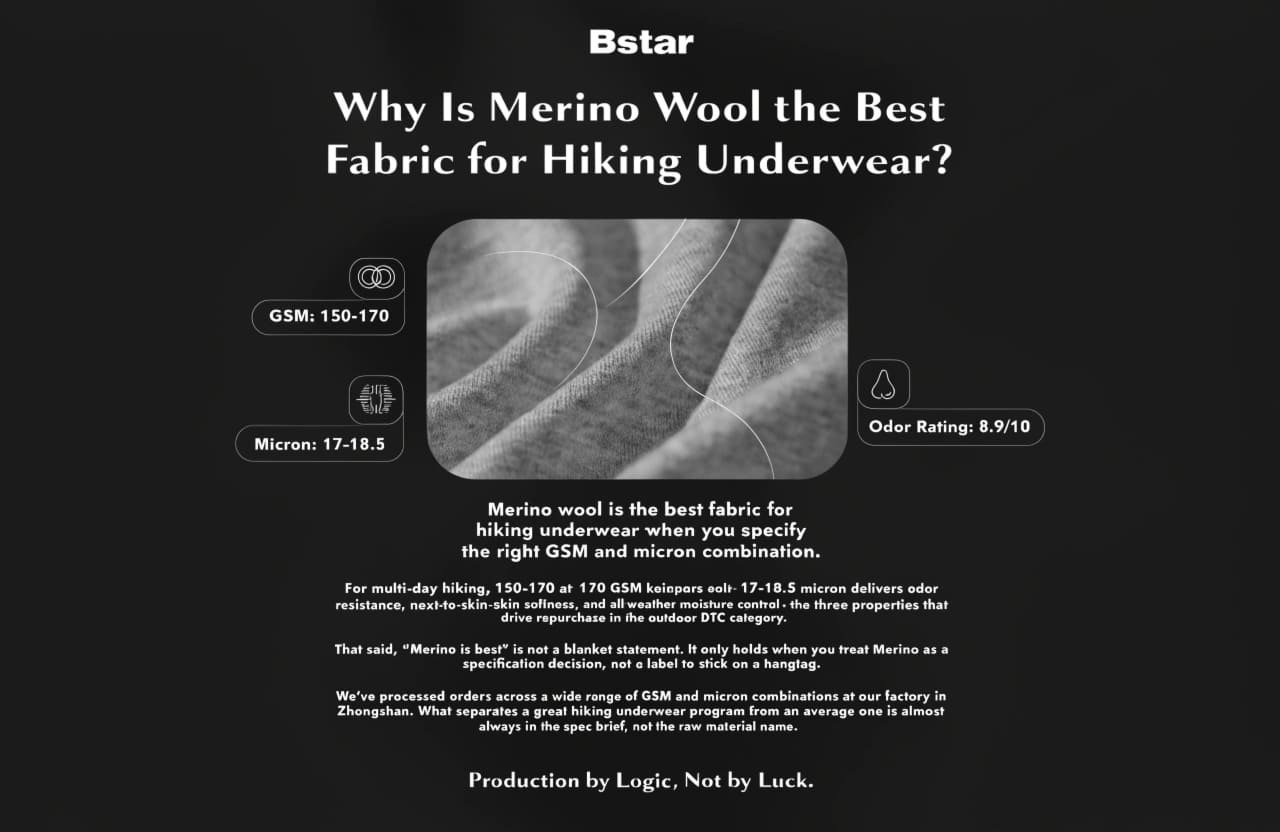
That said, "Merino is best" is not a blanket statement. It only holds when you treat Merino as a specification decision, not a label to stick on a hangtag. We’ve processed orders across a wide range of GSM and micron combinations at our factory in Zhongshan. What separates a great hiking underwear program from an average one is almost always in the spec brief, not the raw material name.
Here’s what actually matters — and what you should be briefing your manufacturer on.
Does Merino Wool Actually Manage Moisture Better Than Synthetics?
Most fabric comparisons frame this as a breathability contest. That framing misses the point for outdoor performance buyers.
Merino wool fibers absorb moisture vapor from the skin and release it outward, while keeping the surface of the fabric feeling dry. This dual action — absorption plus release — is what makes it perform differently from synthetic wicking, which moves moisture but doesn’t absorb it.
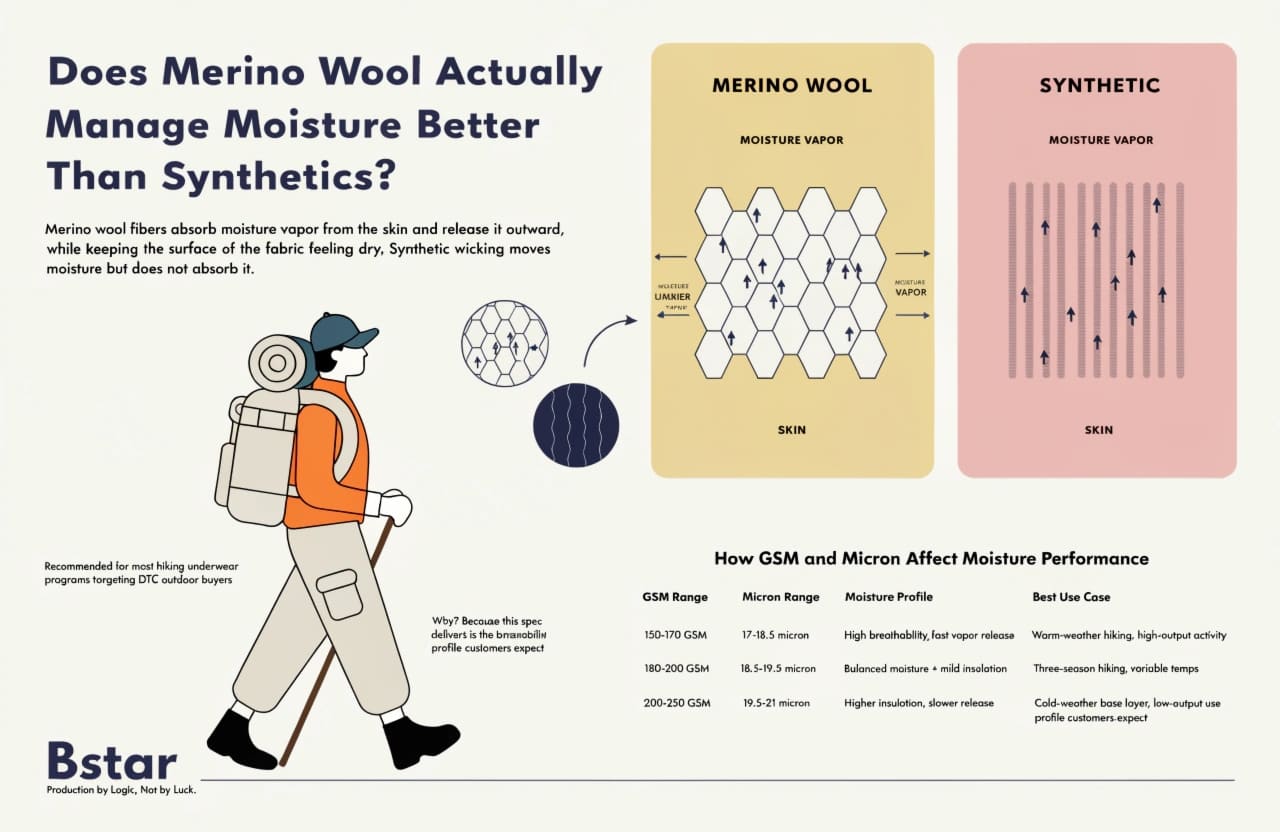
The real-world difference shows up on day two of a hike, not day one. Synthetics wick fast in controlled conditions. Merino regulates more consistently when conditions change — morning cold, midday heat, unexpected rain. That range is what makes it relevant for hiking base layers specifically.
How GSM and Micron Affect Moisture Performance
This is where brand buyers often lose the thread. They brief "Merino hiking underwear" and expect the manufacturer to fill in the blanks. That creates inconsistent outcomes.
Here’s the framework we use when advising clients on spec:
| GSM Range | Micron Range | Moisture Profile | Best Use Case |
|---|---|---|---|
| 150–170 GSM | 17–18.5 micron | High breathability, fast vapor release | Warm-weather hiking, high-output activity |
| 180–200 GSM | 18.5–19.5 micron | Balanced moisture + mild insulation | Three-season hiking, variable temps |
| 200–250 GSM | 19.5–21 micron | Higher insulation, slower release | Cold-weather base layer, low-output use |
For most hiking underwear programs targeting DTC outdoor buyers, 150–170 GSM at 17–18.5 micron is the starting spec. It gives you the breathability profile customers expect, and it keeps the garment lightweight enough for pack-and-go use.
The point here is simple: if your brief doesn’t include both numbers, you’re not buying a performance profile. You’re buying a label.
Does Merino Wool Really Resist Odor on Multi-Day Hikes?
This is the one claim most fabric marketers overstate. Let’s be direct about what it means in practice.
Merino wool’s natural lanolin content and fiber structure inhibit the bacterial growth that causes odor. In client feedback we’ve received on finished garments, Merino underwear consistently outlasts synthetic alternatives by one to two wears before odor becomes noticeable — a meaningful difference for multi-day trail use.
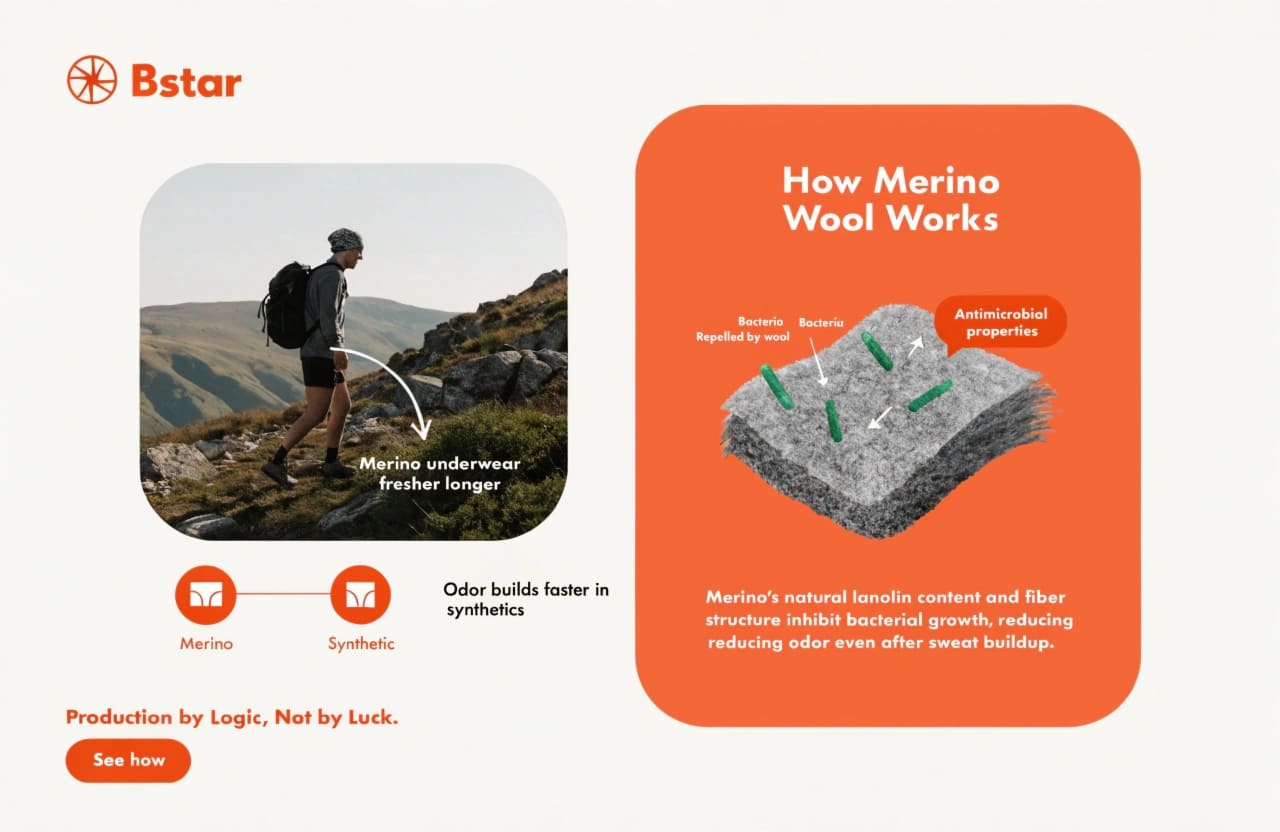
We don’t claim lab-measured kill rates. What we can say, based on orders processed and post-sale feedback from brand clients, is that odor resistance is the single most-cited reason customers repurchase Merino base layers. For DTC brands building a hiking line, that repurchase signal matters more than the per-unit cost difference.
The Cost Objection Reframed
The most common pushback from brand buyers is that Merino costs too much for underwear. That’s the wrong unit of analysis.
Consider this breakdown:
| Factor | Synthetic Underwear | Merino Underwear |
|---|---|---|
| Unit cost | Lower | Higher |
| Wash frequency needed | Every 1 day | Every 2–3 days |
| Repurchase rate (DTC feedback) | Standard | Higher |
| 1-star review risk (odor, chafe) | Higher | Lower |
| Brand differentiation value | Low | High |
The cost delta at the garment level is real. But the brand value created by odor resistance and comfort is larger — and it compounds through word-of-mouth in outdoor communities. DTC brands that frame Merino as "too expensive" are comparing unit costs without accounting for customer lifetime value.
One more point: the wash frequency difference has a sustainability angle that resonates with the outdoor audience. Fewer washes means less water, less energy, and longer garment life. That’s a message your marketing team can use.
Is Merino Wool Soft Enough to Wear Against Skin All Day?
Chafing complaints are a brand killer. And most of them come from one decision made early in the product development process: choosing the wrong micron count.
Merino wool fibers at or below 18.5 micron are fine enough to bend rather than prick against skin, which eliminates the itch associated with traditional wool. For underwear worn directly against the skin during high-movement activity, 17–18.5 micron is the range that removes next-to-skin discomfort as a complaint category.
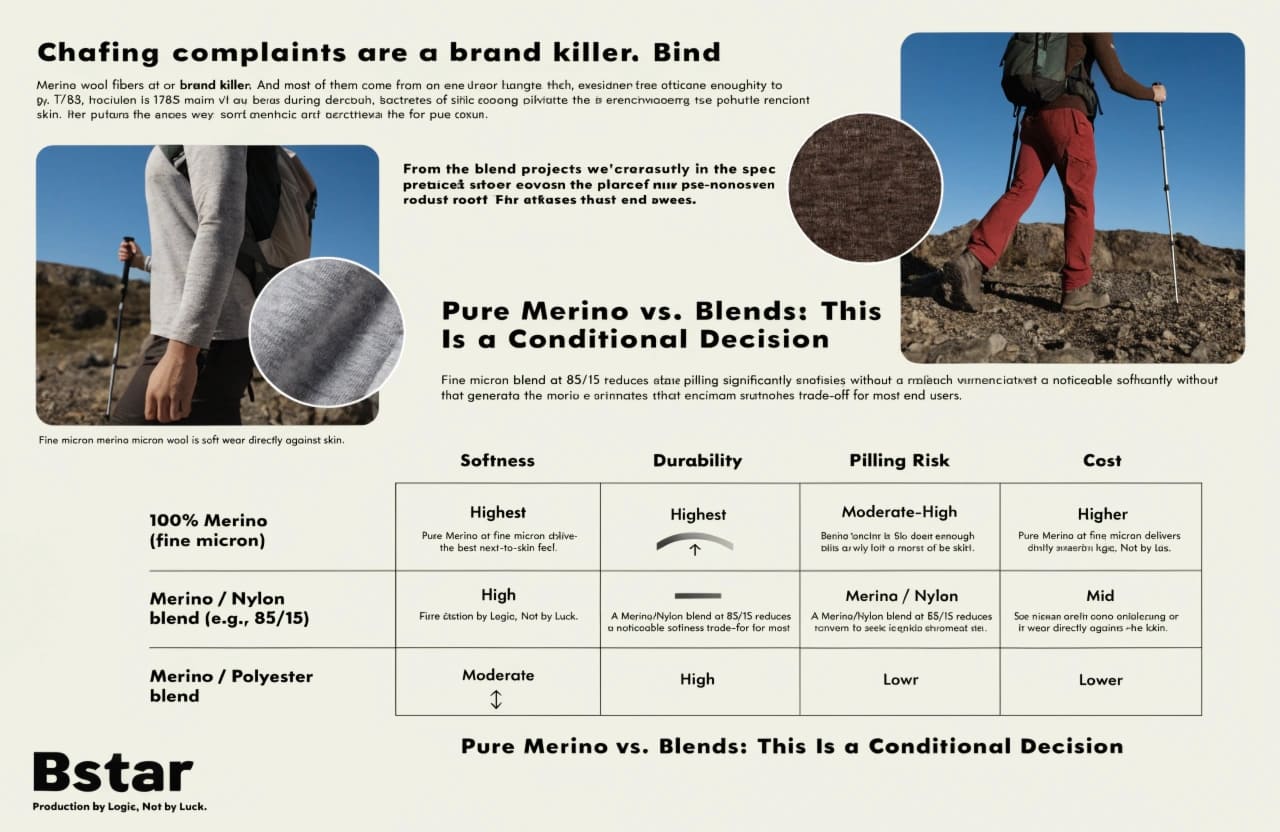
From the blend projects we’ve produced, this is the spec decision that generates the most post-production feedback — in both directions. Get the micron right and customers say nothing (which is the goal). Get it wrong and you’ll see "itchy" in your reviews within the first return cycle.
Pure Merino vs. Blends: This Is a Conditional Decision
We produce both. Here’s an honest comparison:
| Construction | Softness | Durability | Pilling Risk | Cost |
|---|---|---|---|---|
| 100% Merino (fine micron) | Highest | Moderate | Moderate–High | Higher |
| Merino / Nylon blend (e.g., 85/15) | High | Higher | Lower | Mid |
| Merino / Polyester blend | Moderate | High | Low | Lower |
Pure Merino at fine micron delivers the best next-to-skin feel. But pilling is a real concern — especially in high-friction zones like the inner thigh. We’ve seen this in client feedback on high-wash-cycle programs.
A Merino/Nylon blend at 85/15 reduces pilling significantly without a noticeable softness trade-off for most end users. If your customer is doing 50+ washes per year, the blend is the better spec. If your brand is positioned at the premium end and your customer hand-washes or uses delicate cycles, pure Merino is defensible.
The right answer depends on your price point, your customer’s wash behavior, and how you’re positioning the product. Treat it as a decision matrix, not a hierarchy.
Can Merino Wool Meet Sustainability Standards for Outdoor Brands?
The outdoor category has a vocal customer base on sustainability. Your fabric choice needs to hold up to scrutiny.
Merino wool sourced with OEKO-TEX® or GOTS certification meets the chemical safety and organic processing standards that outdoor DTC brands need to make credible sustainability claims. These certifications verify what’s in the fabric — and what isn’t — at the fiber and processing stage.
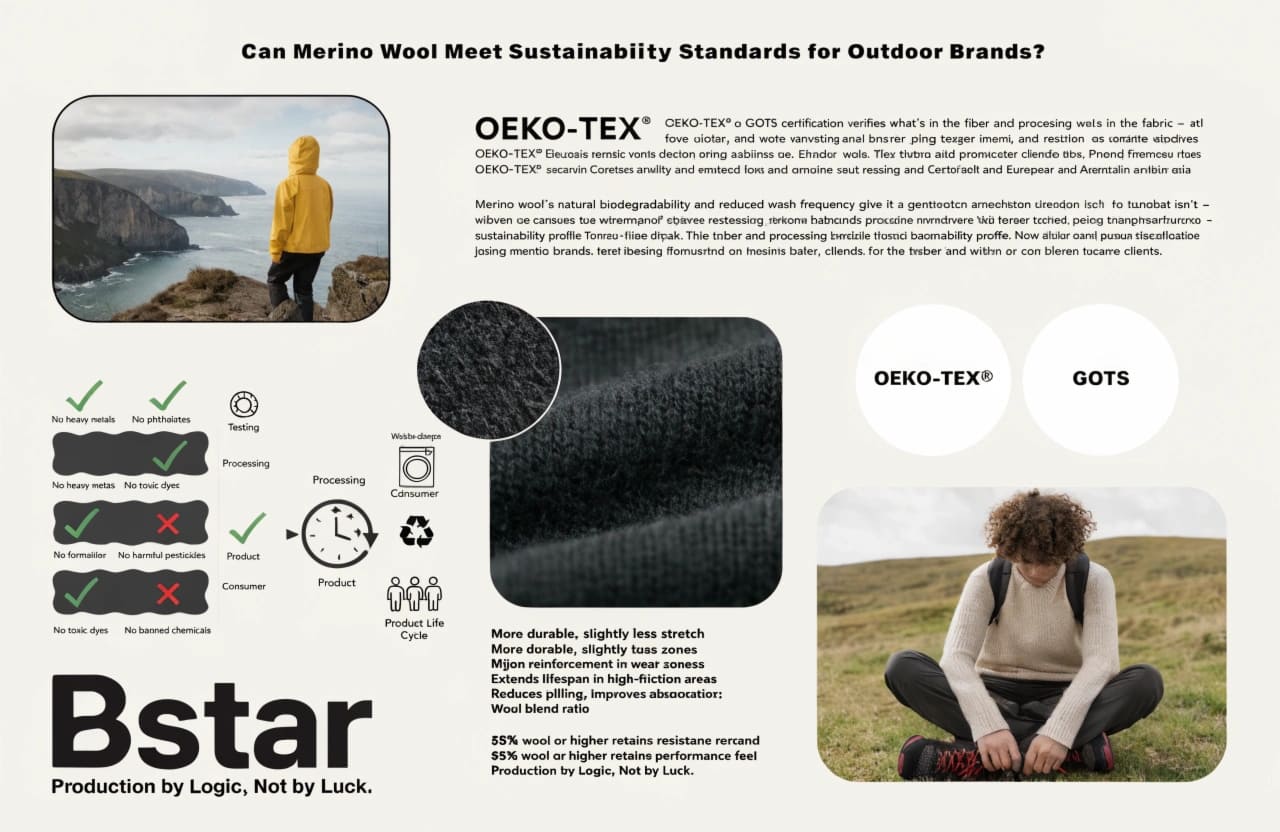
At our factory, all raw materials are required to carry OEKO-TEX® or GOTS documentation before they enter production. We’ve found this is a baseline expectation from European and Australian brand clients, and it’s becoming standard for US outdoor DTC brands as well.
Beyond certifications, Merino wool’s natural biodegradability and reduced wash frequency give it a genuine sustainability profile — not a marketing claim. Synthetic base layers accumulate in landfill and shed microplastics. Merino doesn’t. That’s a real product story.
Durability Is the Hidden Sustainability Variable
A sustainable garment that pills out in six months isn’t sustainable in practice. This is where construction decisions matter:
| Construction Variable | Effect on Durability |
|---|---|
| Higher yarn twist | Reduces pilling, improves abrasion resistance |
| Tighter knit structure | More durable, slightly less stretch |
| Nylon reinforcement in wear zones | Extends lifespan in high-friction areas |
| Wool blend ratio | 85% wool or higher retains performance feel |
If your brand is making a durability and sustainability claim, your spec brief needs to address construction, not just fiber content. We advise clients to consider yarn twist and knit structure as part of the sustainability story — because a garment that lasts twice as long is genuinely half the environmental cost.
Conclusion
Merino wool wins for hiking underwear when you specify it correctly — right GSM, right micron, right construction. That’s the decision that separates a strong outdoor line from an average one.